Views from cities of Rajasthan
I'm melting into my seat, the one I've been craving for twelve days, losing myself back into the familiar rhythms of my workspace, the tools I love arranged just so. My partner and I are back in Bangalore after Rajasthan, and there's relief in returning to what we know, even as the trip keeps playing back in our heads.
The trip, in my head, is not five cities as separate chapters, it's one continuous strip of moving image, like when you look out of a bus window and the landscape blurs rhythmically, and the mind keeps doing this little rubber-band thing where it snaps into the present for a second (a turn, a signboard, a smell, someone's loud conversation or the dust on your glasses), and then it snaps back out into this broader, slightly abstracted place where you start thinking about how people even built cities here in the first place, and why so much of what we call "modern" looks like it's forgotten what the land was trying to tell us.
It was twelve days, and the itinerary sounds neat when you say it as a list, which is always suspicious because real travel is never as neat as a list, but still, the list was there scattered pins across cities: Jaipur, then Pushkar, then Jodhpur, then Jaisalmer, then Udaipur, and in between these names there were hours of being carried by RSRTC buses, which are, in a very literal sense, one of the state's connective tissues, moving people across the distance, making the vast state feel like something you can actually traverse.
Inside cities we mostly moved on a scooter, which is such an underrated way of learning a place because you're not sealed inside a car with your own climate and music and private bubble, but you're also not fully exposed the way you are on foot, so you sit in this in-between layer of reality where the city hits you in small doses, in gusts, and you start measuring distance in turns and signals and the way a neighborhood changes over ten minutes, and then, in the last two cities, we chose to walk more, which shifts everything again because walking isn't just "slower," it changes what you notice, the way you feel the ground, the way you start seeing street-level detail as the actual substance of a city rather than as background texture.
There was a rhythm to how the cities changed. Jaipur was a melange of old and new, constantly switching between them. Pushkar felt spiritual, centered entirely around its sacred lake. Jodhpur threw us back into old and new, the fort looming over everything. Jaisalmer was complete desert, and we lived in neither the old city nor the new, just out there in the sand. Then Udaipur brought us from desert back to nature, lakes and hills, and again that split between old city and new development. The pattern kept repeating, this tension between past and present that never quite resolved.
Jaipur: Between Old City and New
We stayed in the new city, near Civil Lanes, which meant we lived in contemporary Jaipur's spread of wider roads and modern buildings but had to constantly travel back to the old city for everything worth experiencing. The scooter became our mode of transit between these two temporal zones, weaving through traffic that mixed auto-rickshaws with SUVs, past construction sites building a future that seemed to have little connection to the architecture we'd come to see.
The old city announced itself through density and color. Streets narrowed into bazaars where shops pressed against each other in a riot of textiles, silver jewelry, lac bangles, and miniature paintings. The architecture here responded to the desert climate with an intelligence that contemporary buildings had forgotten: thick walls that provided thermal mass, courtyards that created their own microclimates, jharokhas that caught whatever breeze existed in the still air. The bazaars were beautiful, though I noticed how they'd become slightly homogenous, each street offering variations on the same tourist goods rather than the radical specificity of truly local production.
What we sought out were the rooftops. Nearly every restaurant in the old city had terraces with views toward Amer Fort, sitting massive and golden on its hill in the distance. We claimed these spaces in the evenings, ordering beers and settling in with cigarettes, watching the light change across the fort's walls as the sun descended. There was something about being above the street-level chaos, able to see the shape of the city spreading beneath us, that created the breathing room necessary for actually experiencing the place rather than simply moving through it.
The trip to Amer Fort began early, on the scooter, heading north from the city through morning light. We encountered the elephants first, these massive creatures walking with their mahouts along the road toward the fort, part of the tourist economy that offers elephant rides up the fort's approach. Then came the scams: locals insisting we couldn't take the scooter all the way to the fort, that we'd have to park and walk or hire a different vehicle. I'd researched enough to know this was false, that the road went directly to the entrance, but the confidence with which these claims were delivered was almost impressive in its audacity.

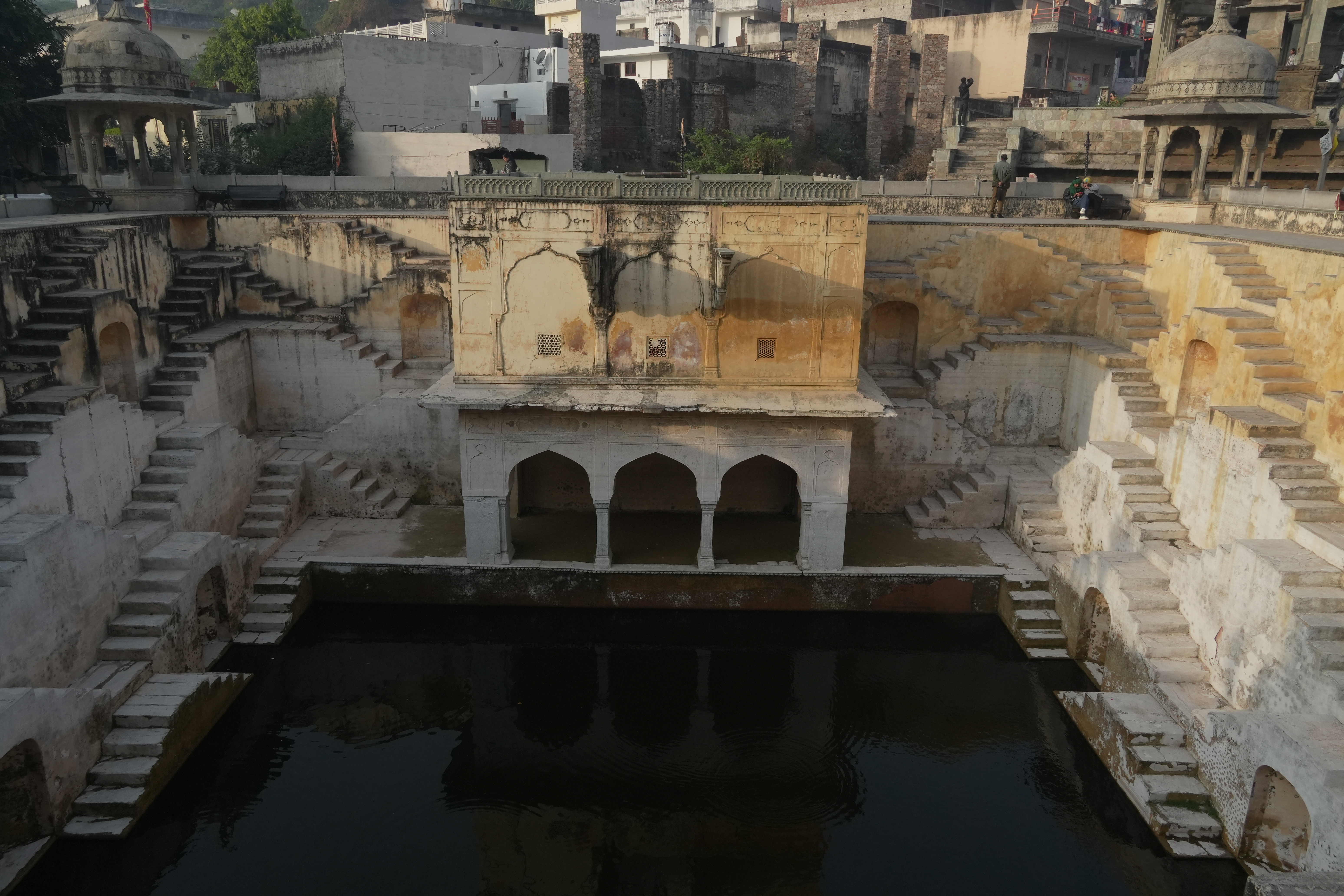
Before reaching Amer Fort itself, we found Panna Meena ka Kund. This stepwell revealed itself suddenly, a geometric descent into the earth: symmetrical stairs on all sides creating a pattern that looked almost algorithmic in its precision. This was the first stepwell we'd encountered, and I was grateful to be seeing it with my new lens, with a way of photographing that let me capture the interplay of light and shadow across those descending planes. The kund was both functional infrastructure and sculptural form, a solution to the problem of accessing groundwater that had been transformed through design into something approaching art.
Amer Fort itself sprawled across the hilltop, massive and labyrinthine. We wandered through courtyards and chambers, past mirrored halls and painted ceilings, trying to imagine what it meant to inhabit such a space when it was a living palace rather than a tourist site. The views from the fort's walls were stunning: mountains in the distance, the valley below, the city spreading outward in patterns that recorded centuries of growth and change. But we arrived on a holiday, which meant certain sections were locked, their interiors inaccessible. There's a particular frustration to traveling to see architecture and finding it closed, like reading a book with crucial chapters missing.
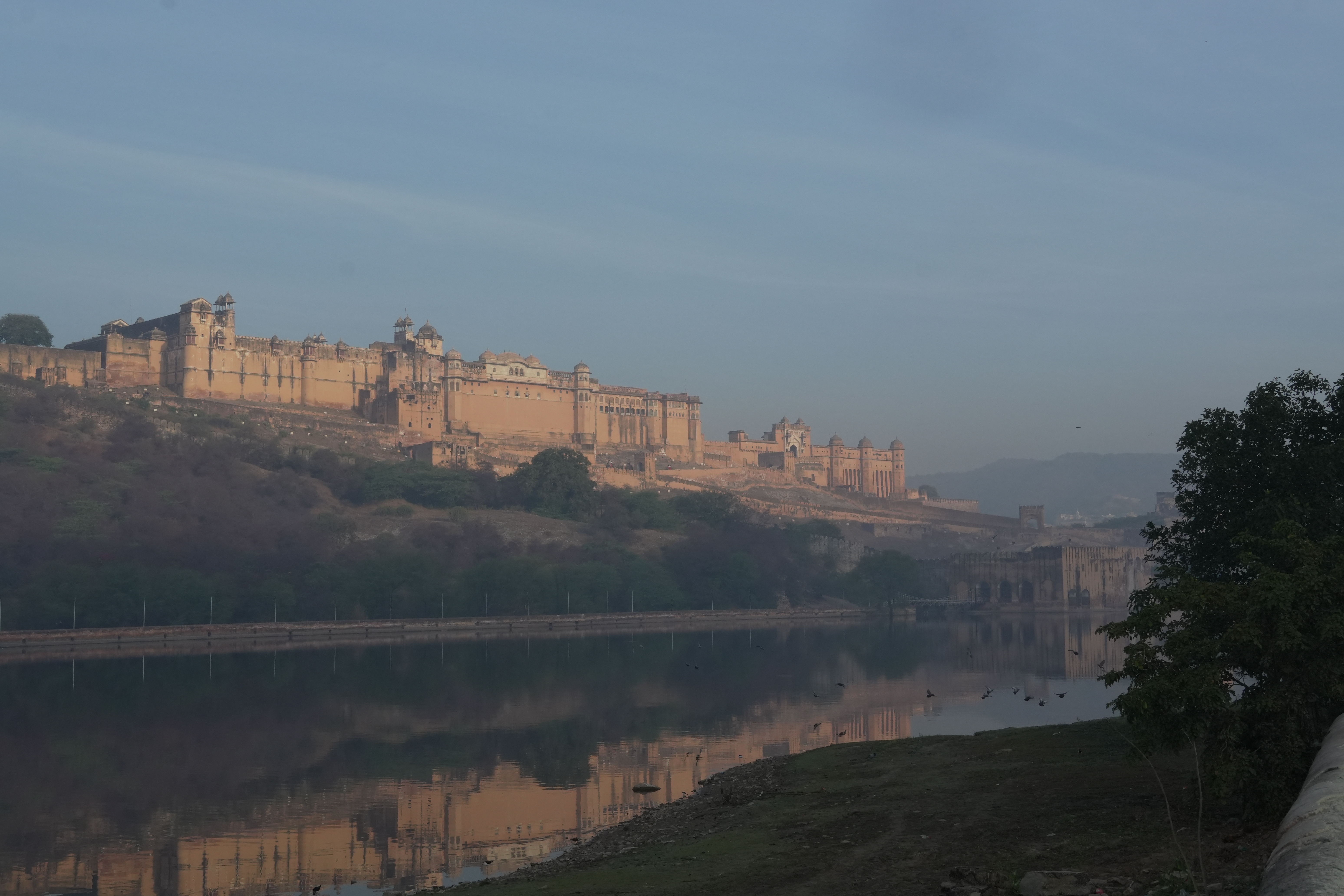
View of the Amer fort
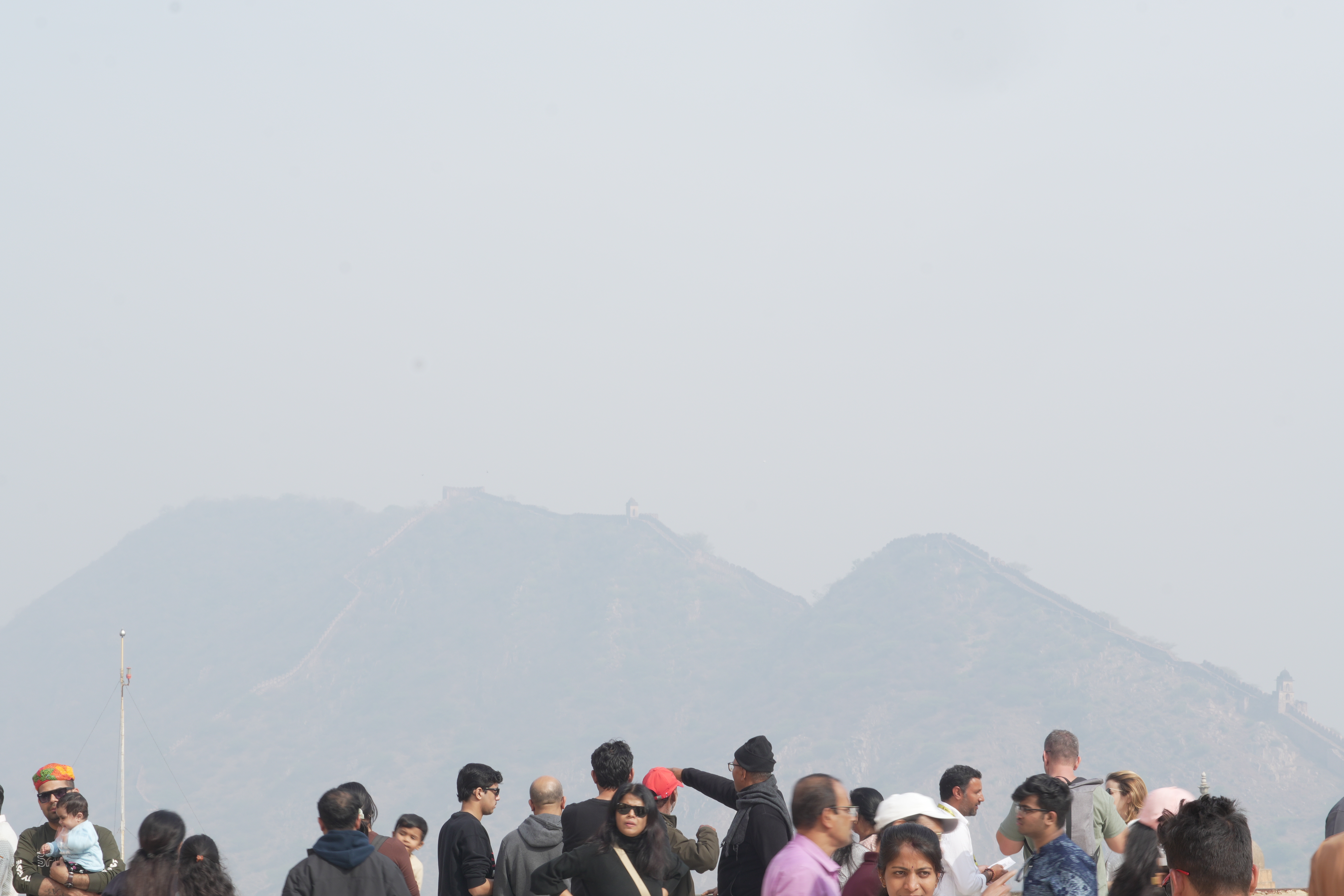
A view of Amer fort Walls running atop hills
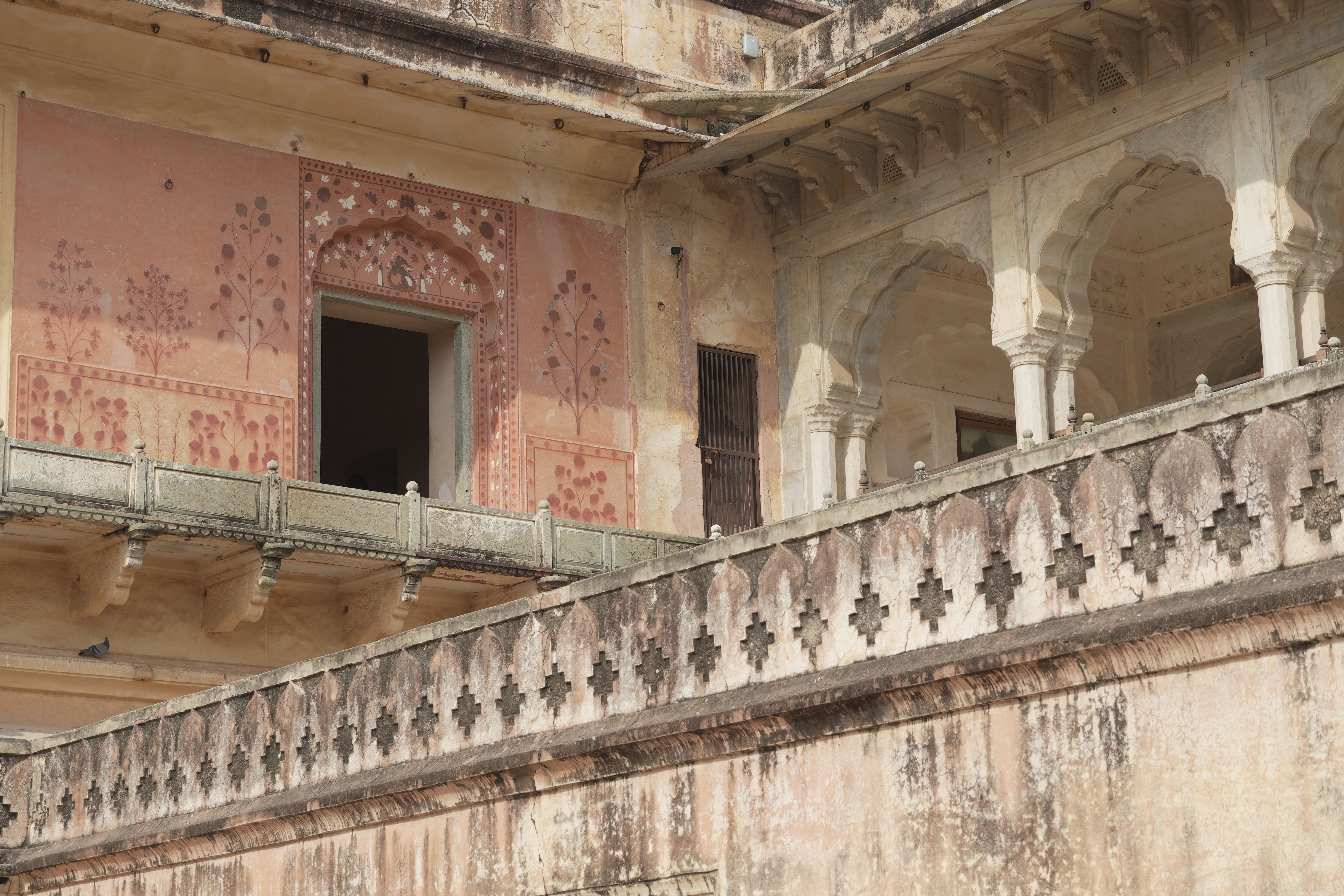
(From an old section of the Amer fort) Back in the new city, we searched desperately for decent coffee. The craving for something beyond instant had become acute. We finally found Curious Life, which offered pour-over, a small miracle in this landscape. They were brewing Nigerian coffee, serving it through an AeroPress. The coffee was okay, mid-not terrible but not particularly memorable either. I got the sense that not many people actually ordered pour-over here, that most customers wanted the familiar rather than the particular. Still, there was something comforting about the ritual of it, the careful preparation even if the result didn't quite deliver.
But the highlight of Jaipur, the experience that shifted something in my understanding, was the Amrapali Museum. Located in the C-scheme area, this museum houses a collection of nearly 4,000 objects focused on Indian jewelry and jeweled artifacts. The founders, Rajiv Arora and Rajesh Ajmera, had spent over four decades collecting these pieces from across the subcontinent, driven initially by practical needs for their jewelry business but gradually realizing they were documenting traditions that were vanishing as metals got melted down and reused, as designs were lost to changing tastes and market pressures.
Walking through the museum's two floors felt like encountering the full elaboration of human adornment. India adorns the body from head to toe in ways that Western jewelry barely imagines: forehead pieces (borla), hair ornaments (jadai nagam shaped like serpents), nose rings (nath) that function like wedding bands, elaborate ear decorations that layer multiple types of jewelry, waist chains, ankle ornaments, toe rings. The collection focused particularly on tribal silver jewelry, pieces worn daily or for festivals rather than the exceptional gems created for maharajahs.
What struck me was how these objects embodied knowledge about metalworking, about the properties of different alloys, about techniques of enameling and stone-setting that had been refined over generations. A bridegroom's crown from Himachal Pradesh, a mirror-work necklace in emerald and white, elaborate temple jewelry with religious iconography—each piece carried within it not just aesthetic choices but social meaning, marking rites of passage, indicating regional identity, signifying status and occasion. The audio guide provided context, stories about how these objects functioned in living communities, but what I kept thinking about was the gap between the museum and the world outside.
These traditions were being preserved precisely because they were dying. The museum existed as an archive of practices that could no longer sustain themselves economically or culturally in contemporary India. The craftspeople who knew these techniques were aging out without apprentices. The museum was beautiful and necessary, but it was also a kind of tomb, a recognition that these living traditions had become historical artifacts.
Pushkar: Water as Center
Pushkar arrived as necessary pause, a shift in both pace and density. We'd chosen accommodation far from the city center, a place where we could actually see the sky at night, where the stars emerged without competition from urban light pollution. After Jaipur's constant motion, this distance felt essential, a reminder that the desert could still offer darkness and quiet if you positioned yourself correctly. The creamy hash we smoked softened the stars and the cold wind for us.
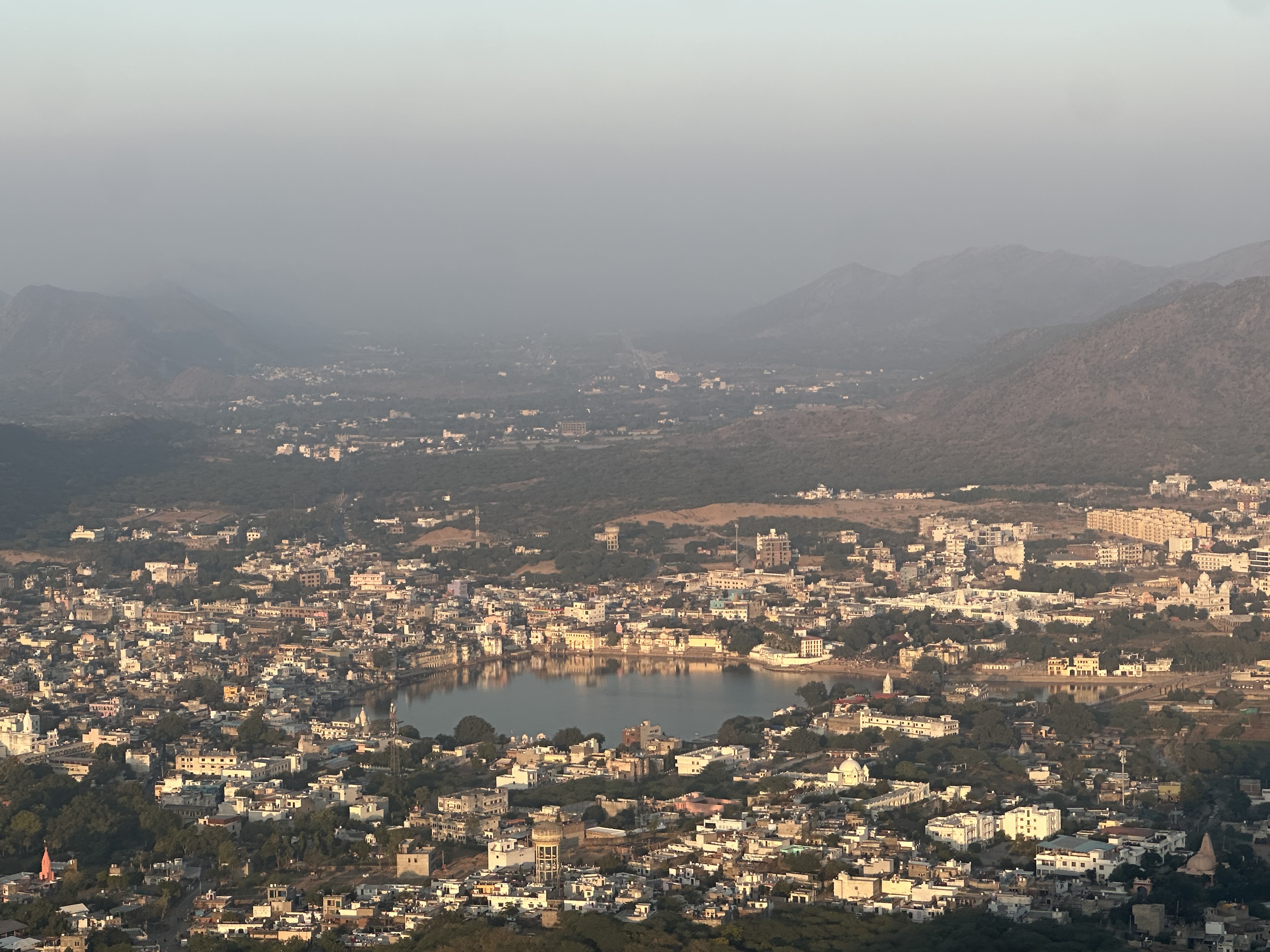
(A view from the top of a hill where Savitri devi temple is located, hard earned view for my hash laden lungs)
The city itself was built entirely around its sacred lake, the water functioning as both literal and spiritual center. Everything radiated outward from that still surface: the white-washed ghats where pilgrims bathed, the temples that lined the perimeter, the markets that wrapped around the lake in walkable small streets. The design was impressive in its simplicity, creating a pedestrian-scale urban fabric of streets where the sacred and commercial mixed without conflict.

When we first approached on the scooter, coming from Jaipur, the sudden change was baffling. The streets narrowed dramatically, the density increased, the whole city seemed to compress around the lake's edge. But once we parked and began walking, the logic revealed itself. This was architecture organized around a center that mattered, where the lake's presence shaped everything else. The markets felt intimate rather than overwhelming, their narrow lanes creating shade and channeling whatever breeze existed.
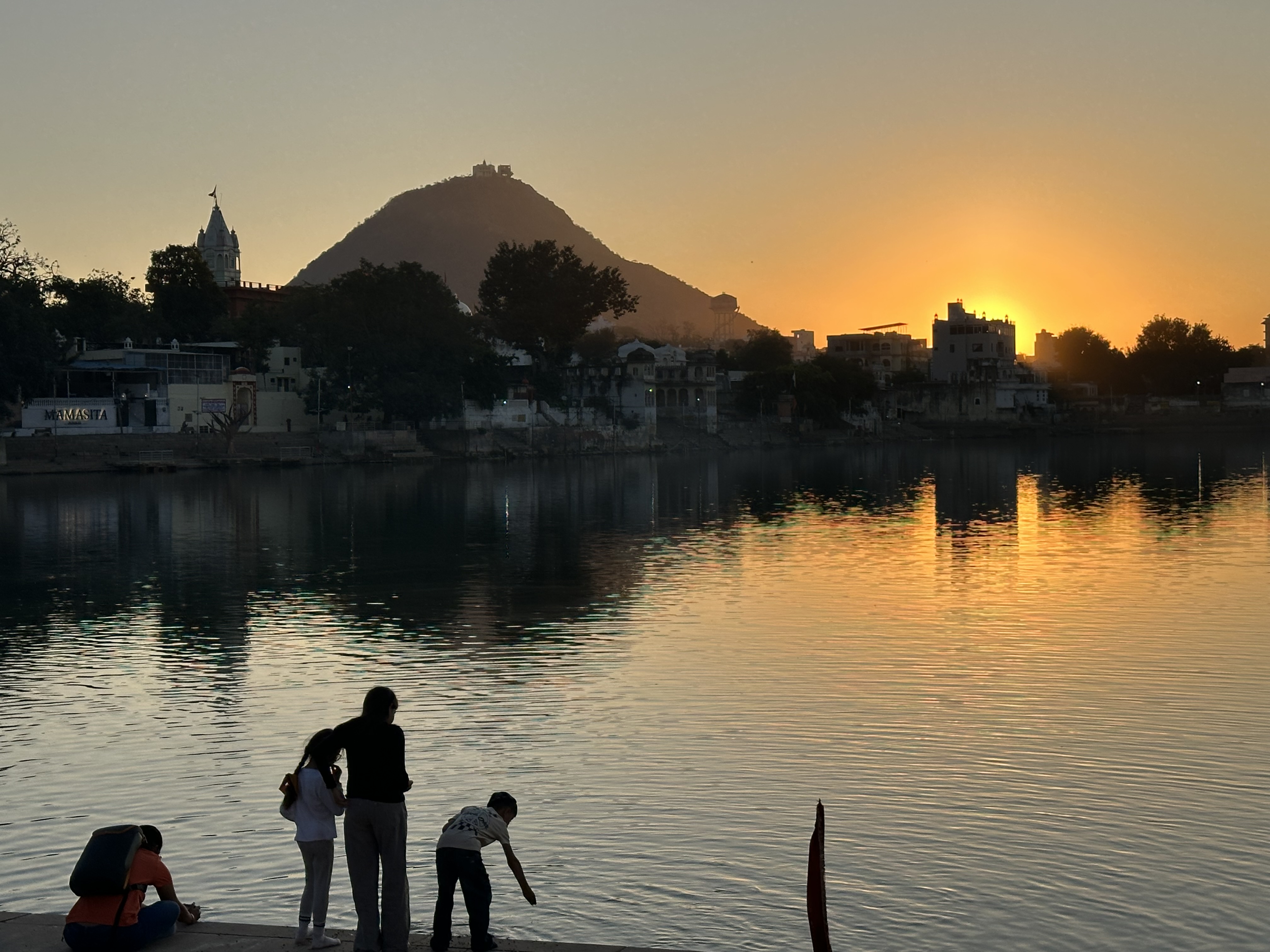
What I kept noticing was the cleanliness, the care taken to maintain the lake and its surroundings. In a country where water bodies are often repositories for garbage and waste, Pushkar's lake remained relatively pristine, protected by its sacred status and the economic incentive of tourism. The relationship between religious significance and environmental care created a virtuous cycle: people came here for spiritual reasons, which meant the water had to be preserved, which made the city livable in ways that purely commercial centers were not.
 (My partner took this really lovely photo)
We spent our time in Pushkar sitting by the ghats, walking, eating simple food, watching the rhythms of pilgrimage and hippies from abroad. People came here not for architectural grandeur but for something more fundamental: water as purification, as renewal, as the literal and metaphorical source of life. In this desert landscape, the lake's existence felt like rarity.
Jodhpur: The Ecology of Scarcity
Jodhpur arrived with force. The city sprawls beneath Mehrangarh Fort, which rises from its rocky perch like a natural outcropping of the landscape itself. We approached it on an RSRTC bus from Pushkar, an air-conditioned public transport that gave us an unfiltered view of Rajasthan beyond the tourist circuits: villages where women balanced water pots on their heads, fields of mustard blooming improbably in the desert. We lived in the old capital that Rao Jodha had abandoned when he built Mehrangarh.
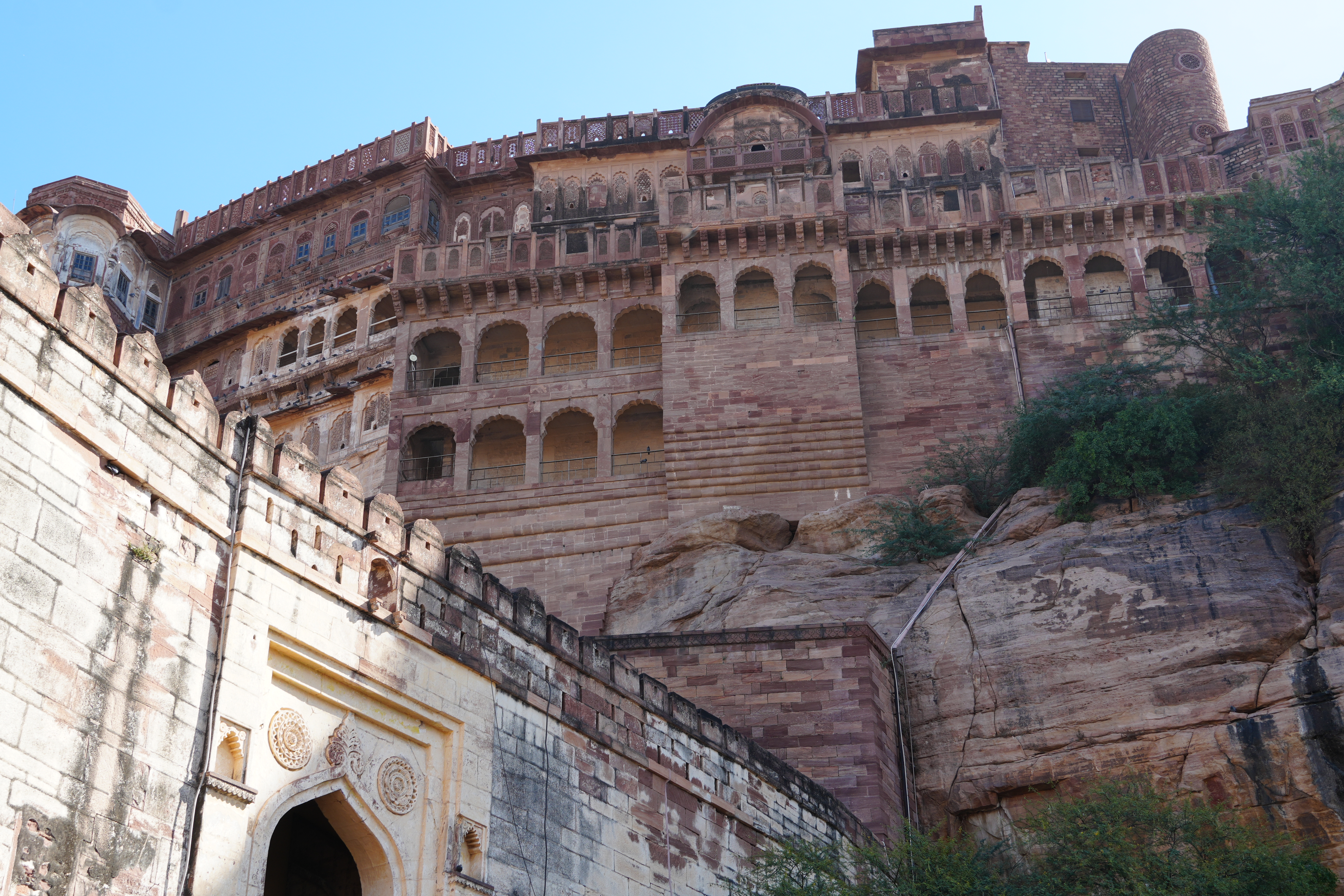
The fort in Mehrangarh dominates Jodhpur in every sense. Standing high above the plains, its walls rise in shades of red sandstone that seem to drink the sunlight. But what fascinated me was not its military might or royal history but rather its relationship to water. The statistic is stark: Jodhpur receives rain for only eighteen days per year on average, sometimes even fewer. In this climate, water becomes the primary challenge around which everything else must organize. Every ruler who controlled this territory had to think deeply about water, to design systems that could harvest, store, and distribute this most precious resource.
At Mehrangarh Fort's museum shop, I found Meghal Arya's "Spatial Ecology of Water," her doctoral research transformed into a careful documentation of Jodhpur's traditional water management systems. Reading it on the trip became a way of seeing the city differently, understanding the architectural choices not just as aesthetic decisions but as sophisticated responses to hydrological constraints.
The ingenuity embedded in these structures becomes visible only when you understand the landscape as a system rather than a collection of isolated buildings. Rainwater falls on the rocky outcrops surrounding the fort and flows through carefully designed catchments toward a series of interconnected reservoirs. The Ranisar and Padamsar lakes, built by two different queens in the fifteenth century, are positioned at different elevations so that overflow from one feeds into the other. Beneath Ranisar sit five small wells called kuiyaan, fed by aquifers that provide water even when the lake's surface levels drop during summer. Persian wheels, operated by draught animals, lifted water from these lakes to higher levels of the fort through channels that still bear traces of their original plastering.
What Meghal Arya documents in her work is how these structures formed a spatial ecology: a network of relationships between topography, architecture, and community practice. The water bodies were not isolated monuments but nodes in a larger system that included collection areas, storage facilities, distribution channels, and the social practices of maintenance and use. Women went to these sites daily to draw water, transforming them into gendered spaces of labor and gossip, ritual and song. The architecture for water transcended pure utility, becoming woven into the fabric of urban life itself.
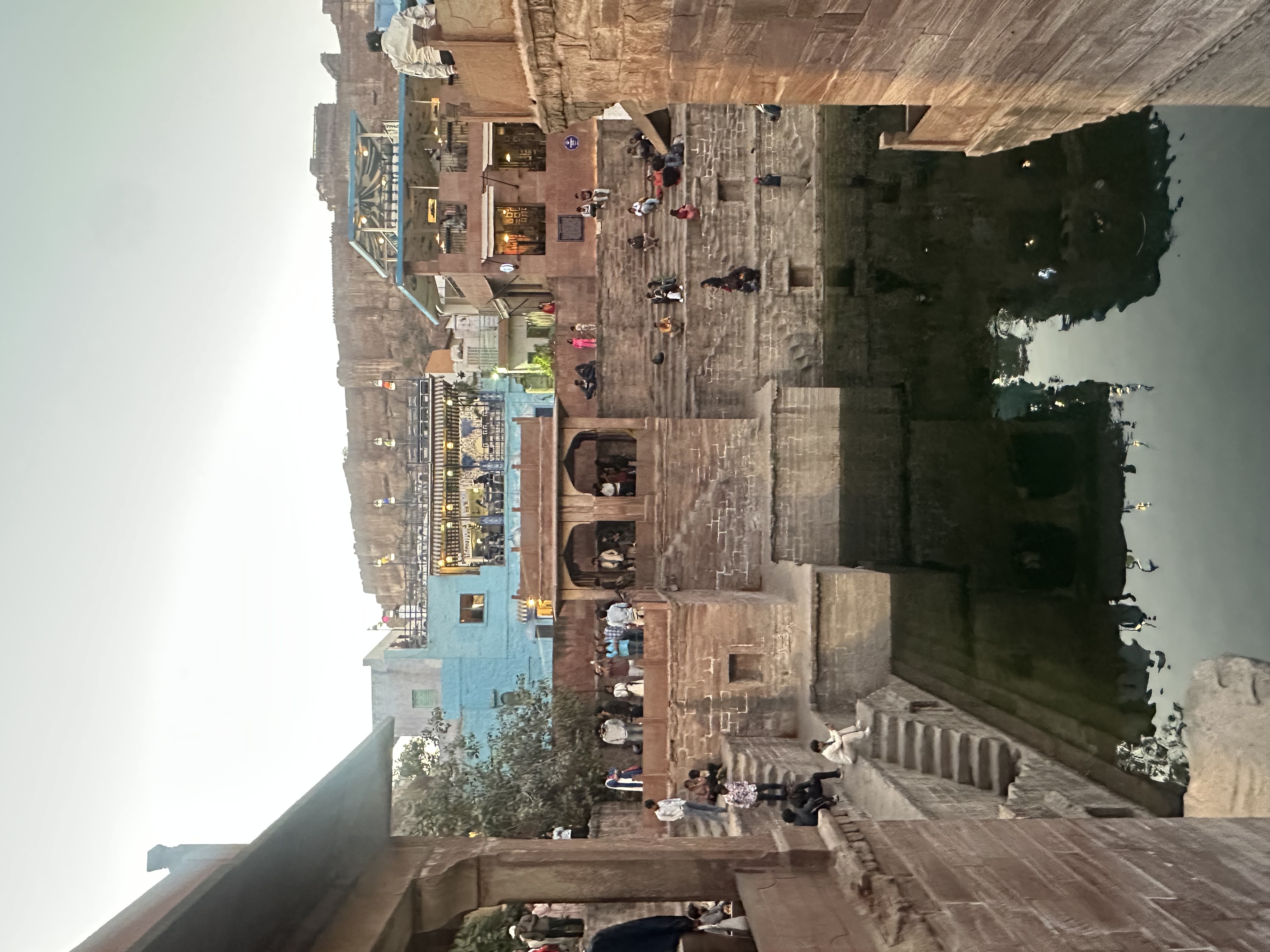
(Toorji ka Jhalra) Walking through Jodhpur today, you can still see remnants of this system, though many structures have fallen into disrepair. Some kunds are choked with vegetation and garbage, their water stagnant rather than flowing. Others have been bypassed entirely by the centralized piped water system introduced by the British in 1897. What once functioned as an integrated ecology has fragmented into isolated monuments, their original purpose obscured by neglect and the forward march of "development."
Our guide through Mehrangarh told us his own story of fragmentation. He was the youngest son in his family. When his father fell ill several years ago, he quit his job in Delhi and returned to become a freelance guide, moving between the various forts and palaces that now sustain the city's tourism economy. As we walked through the fort's courtyards and palaces, I sensed an anxiety in him, a restlessness that only eased when he began talking about Rajasthan's history.
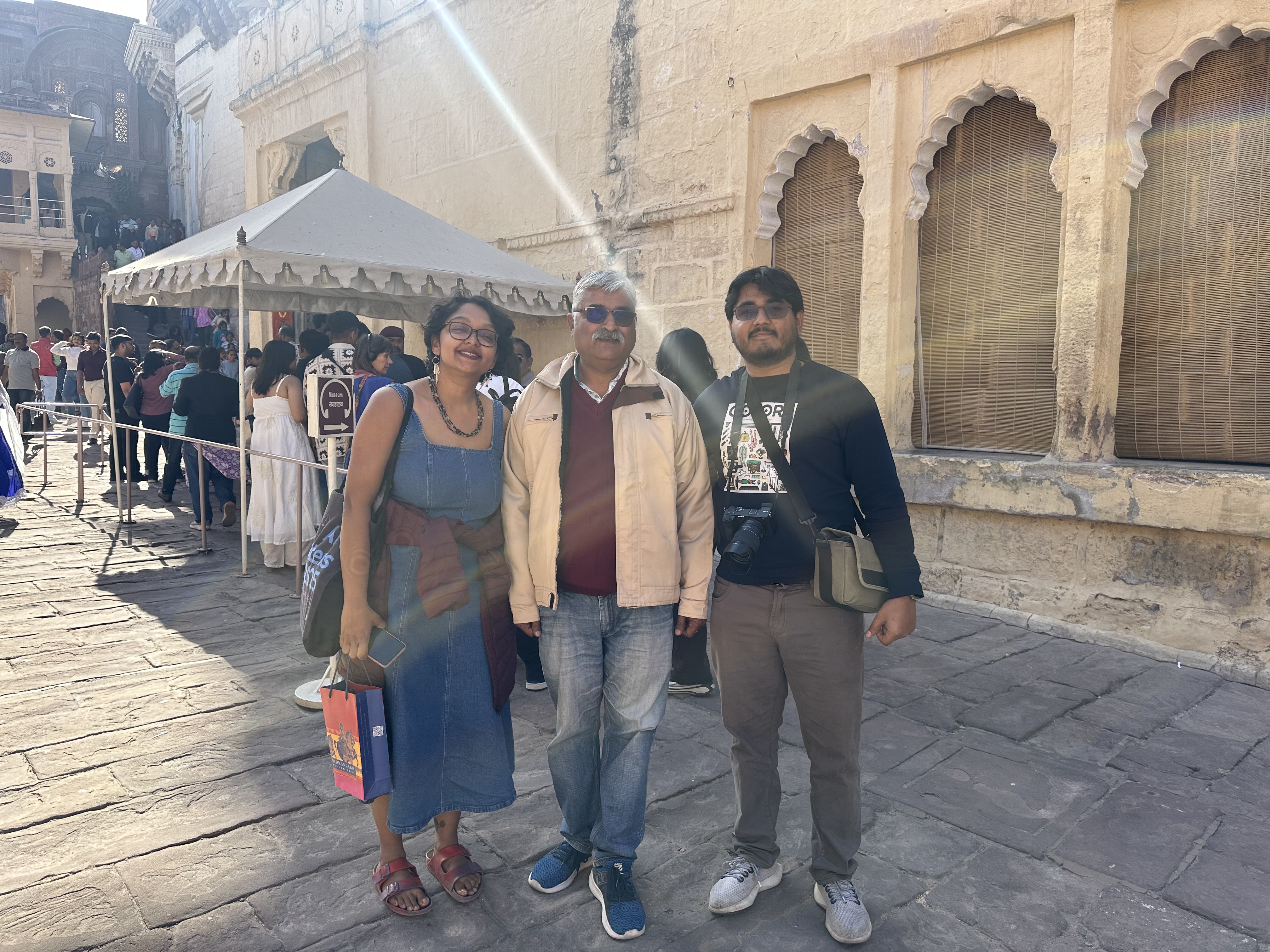
He spoke about the Rathore dynasty with genuine knowledge and care, explaining the political strategies that allowed Jodhpur to survive between the Mughal empire to the north and Mewar to the east. He described the fort's seven gates, each commemorating a different victory or ruler, and guided us through the Sheesh Mahal with its elaborate mirror work, the Phool Mahal that once served as a royal pleasure chamber. In the Phool Mahal he pointed out sections of the intricate painting that remained unfinished, the artist having died after years of work before he could complete it. Seeing the incomplete alongside the finished felt oddly honest, a reminder that not everything gets resolved, that some labor simply stops mid-gesture. The museum's collection of palanquins and turbans documented the region's social hierarchies. But underlying all this historical narration was a more personal narrative about what it meant to return to a place that felt suspended between prosperity and decay, to make peace with a choice that foreclosed other possibilities even as it honored familial duty.
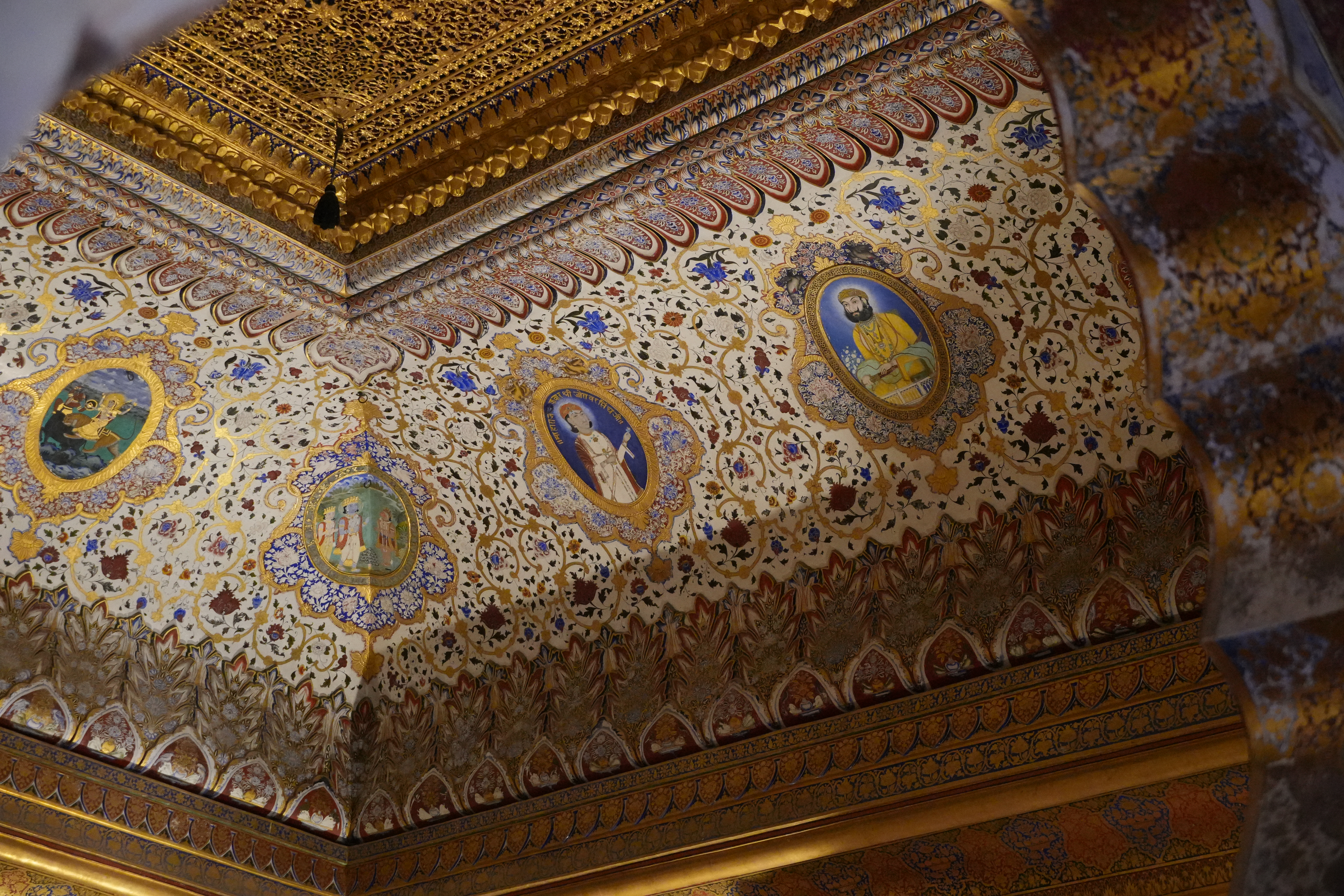
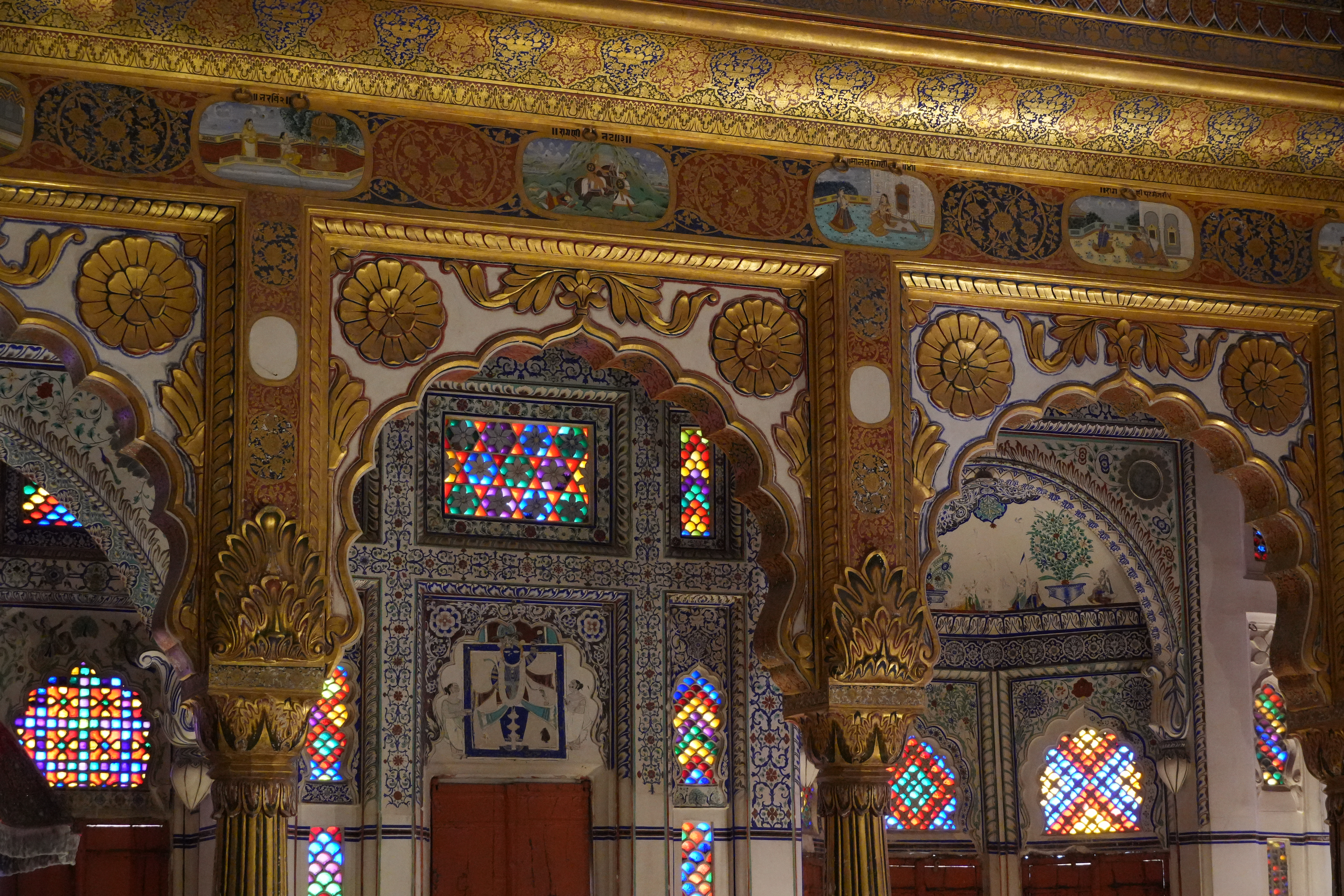
That evening, we searched desperately for good coffee and settled for a decent cappuccino at Nothing Before Coffee. But on the last day we finally found Triple Two in the new city. Mandore itself was a revelation: beautiful gardens filled with cenotaphs and museums, living structures that had been transformed into repositories of collective memory, where people roamed and rested freely. The old and new capitals existed in parallel, one preserved as heritage, the other struggling to define itself against the weight of that heritage.
The distinction between old and new cities appeared everywhere in Jodhpur. The old city, sections of it painted in its famous shades of blue, spreads in a dense warren of narrow lanes beneath the fort. The architecture here responds to climate through intelligence rather than energy: thick walls that provide thermal mass, courtyards that create microclimates, windows positioned to catch cross-breezes, and that distinctive blue paint that some say helps with insulation while others claim repels insects. These buildings understand their environment intimately.

The new city, by contrast, sprawls with cafes and concrete and glass, air-conditioned boxes that ignore rather than engage with the desert climate. The break feels absolute, as though contemporary architecture had amnesia about everything that came before. And yet, to romanticize the old city would be dishonest: many of those blue buildings are dilapidated, their inhabitants lacking basic services, the streets choked with traffic and waste. The past's wisdom about climate does not automatically translate into livable conditions in the present.
Jaisalmer: Chasing What Remains
The bus to Jaisalmer took us deeper into the Thar Desert, through landscape that grew progressively more spare and beautiful. By the time we arrived at our accommodation, we'd already decided to wake at 6 a.m. the next morning for a wildlife safari in search of the Great Indian Bustard, locally known as Godawan.

The Godawan is one of India's most critically endangered birds, with fewer than 150 individuals remaining in the wild. Once common across the dry grasslands, the bird has suffered catastrophic population decline due to habitat loss and hunting.
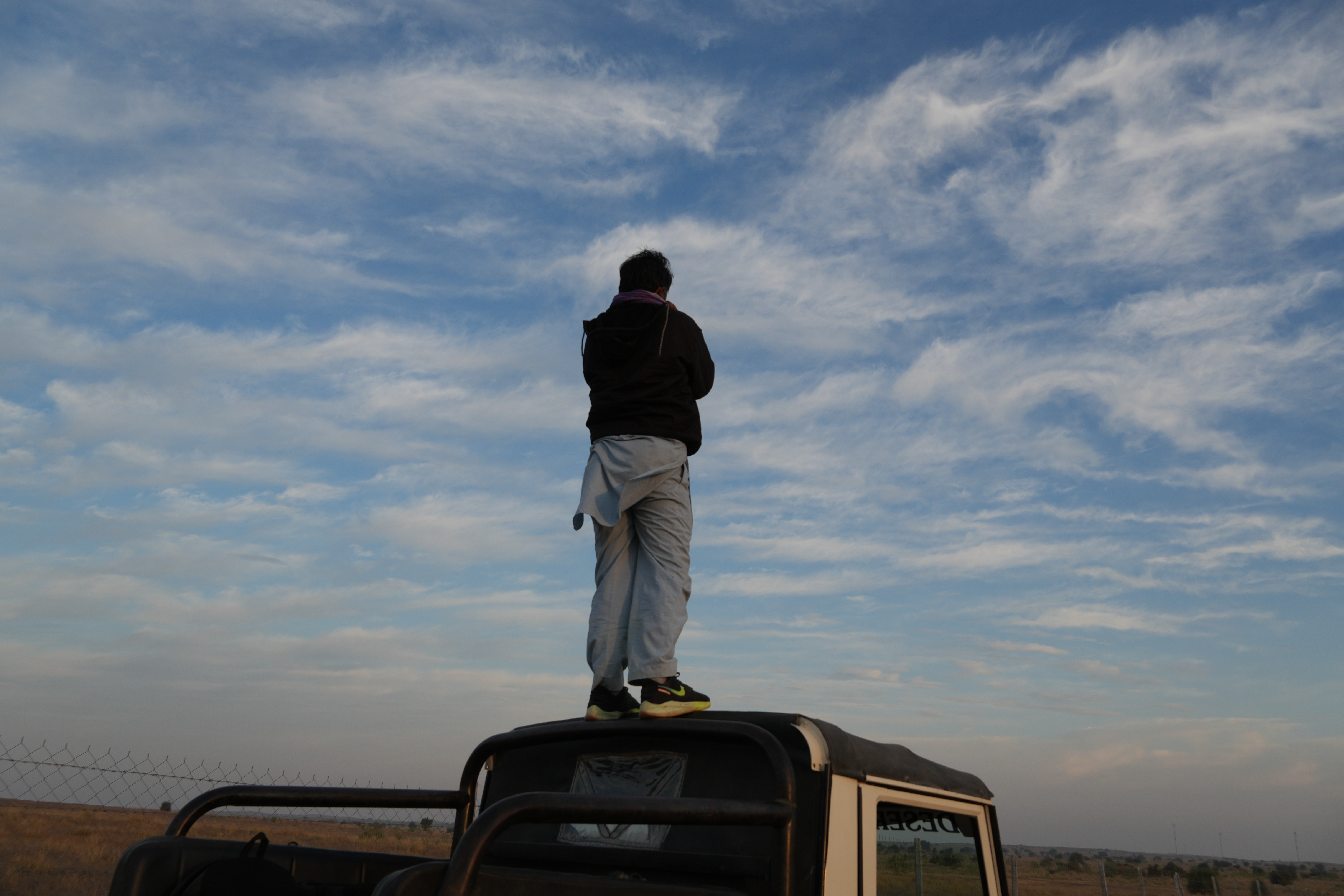
We left before sunrise, driving through cold morning air into landscape that seemed to unfold in layers. The clouds hung low and hypnotic, their shadows creating patterns across sand and scrub. The desert vegetation looked nothing like the towering cacti of American westerns; instead, it consisted of low, twisted bushes that resembled crumpled bottle brushes or gnarled wire growing from bare earth. Mustard farms appeared improbably in the middle of this aridity, their yellow flowers shocking against the muted browns and grays.
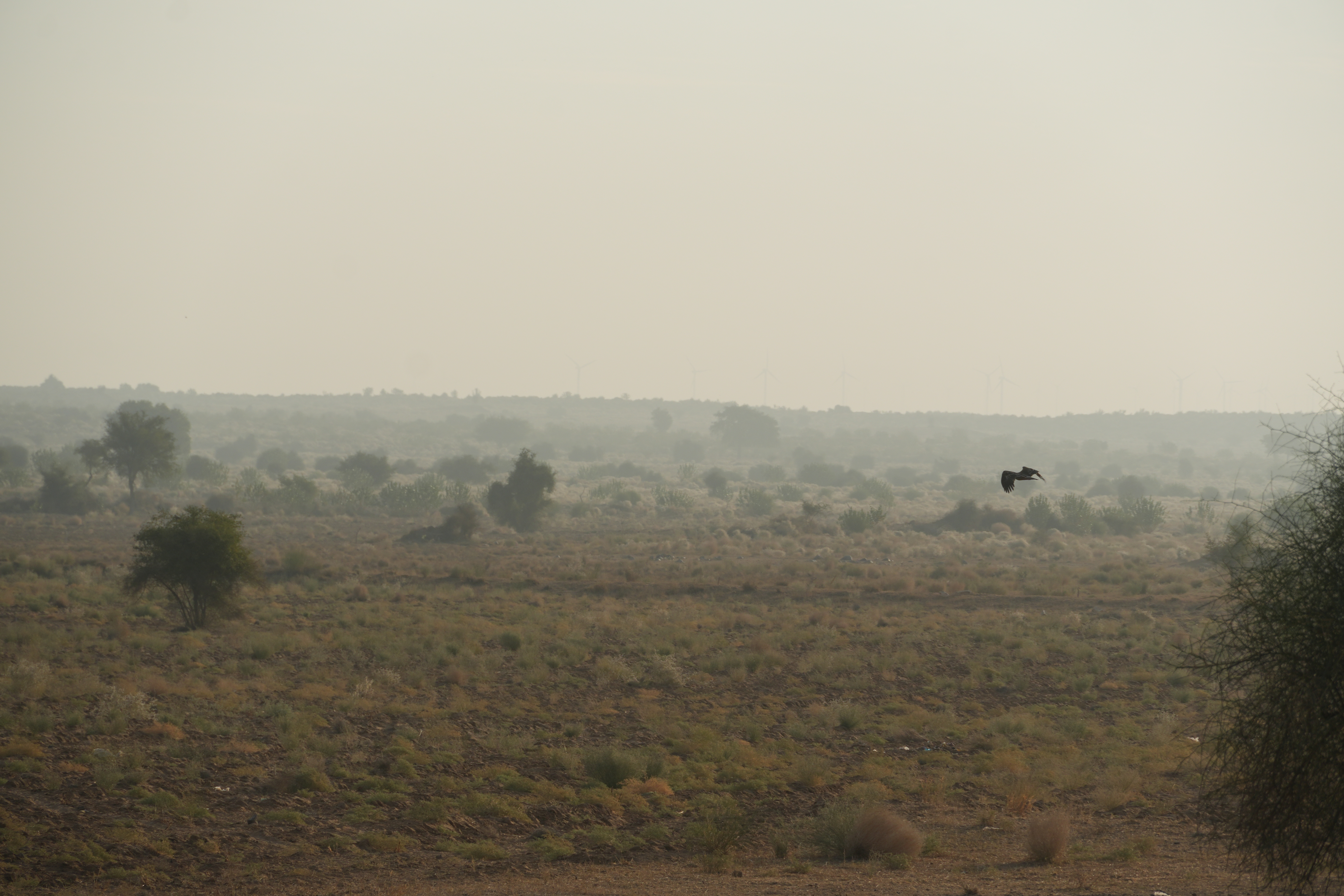
Our driver and guide knew where to look. They scanned the horizon with practiced eyes while we bounced along rough tracks, stopping occasionally to watch other birds: sandgrouse, larks, coursers adapted to this harsh environment. And then, several kilometers from where we started, we saw them: two Great Indian Bustards in flight, their large wings spread against the morning sky. We weren't alone in this search. Two other families from Bangalore, speaking Kannada and carrying professional wildlife photography equipment, had come to chase the same bird. The coincidence felt both surprising and entirely predictable: urban Indians seeking connection to a wildness that our cities have systematically destroyed, traveling hundreds of kilometers to glimpse what once existed everywhere.

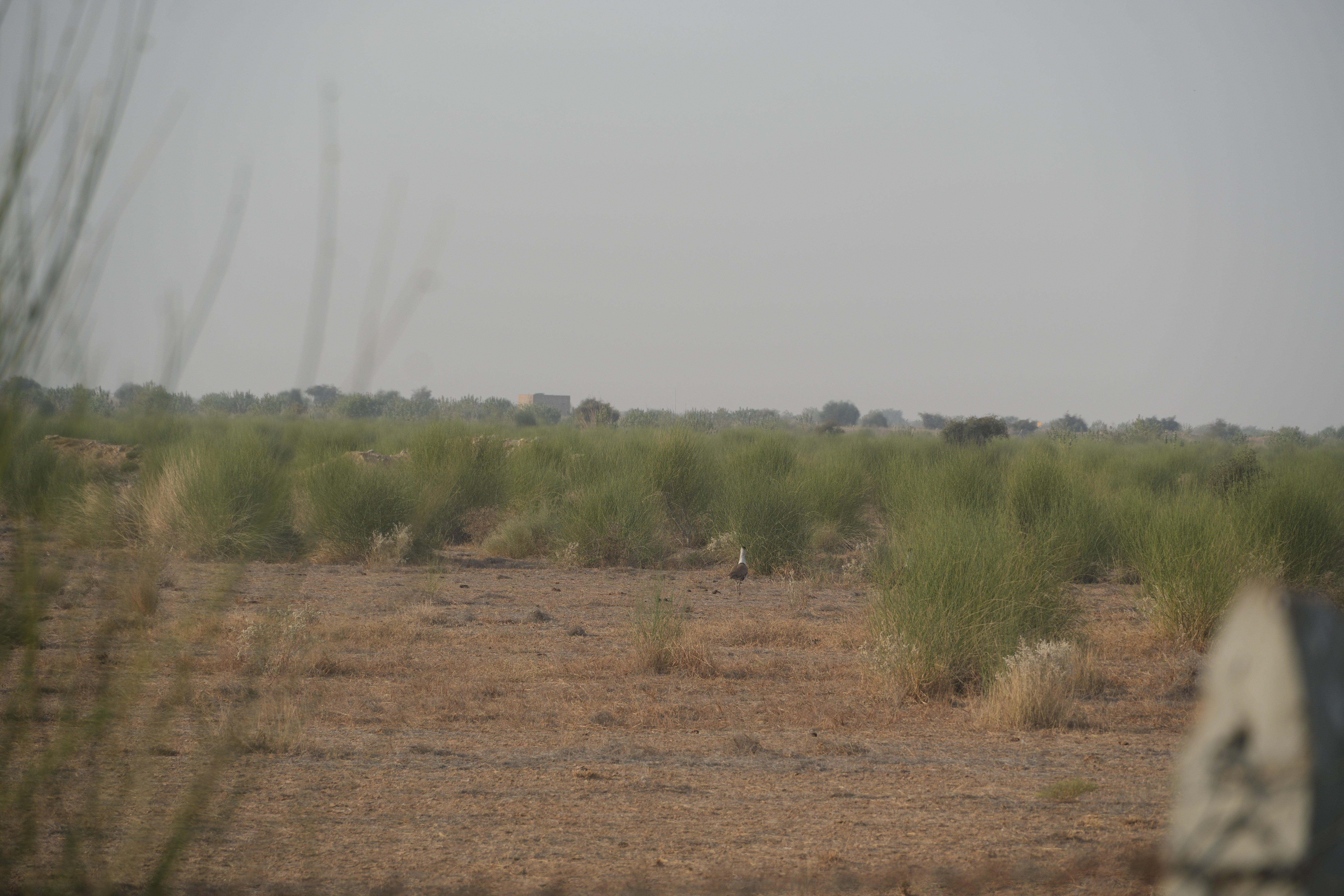
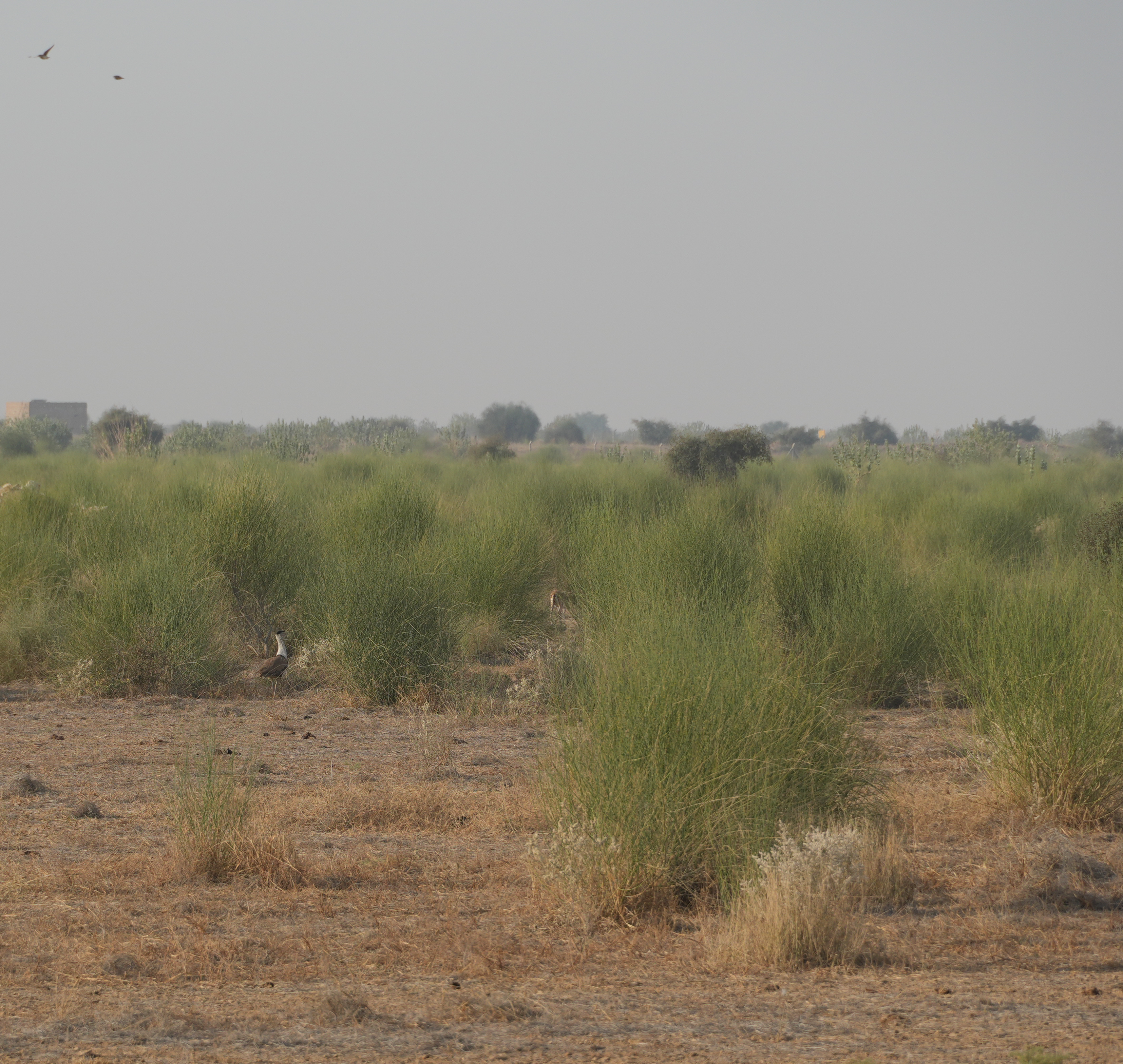
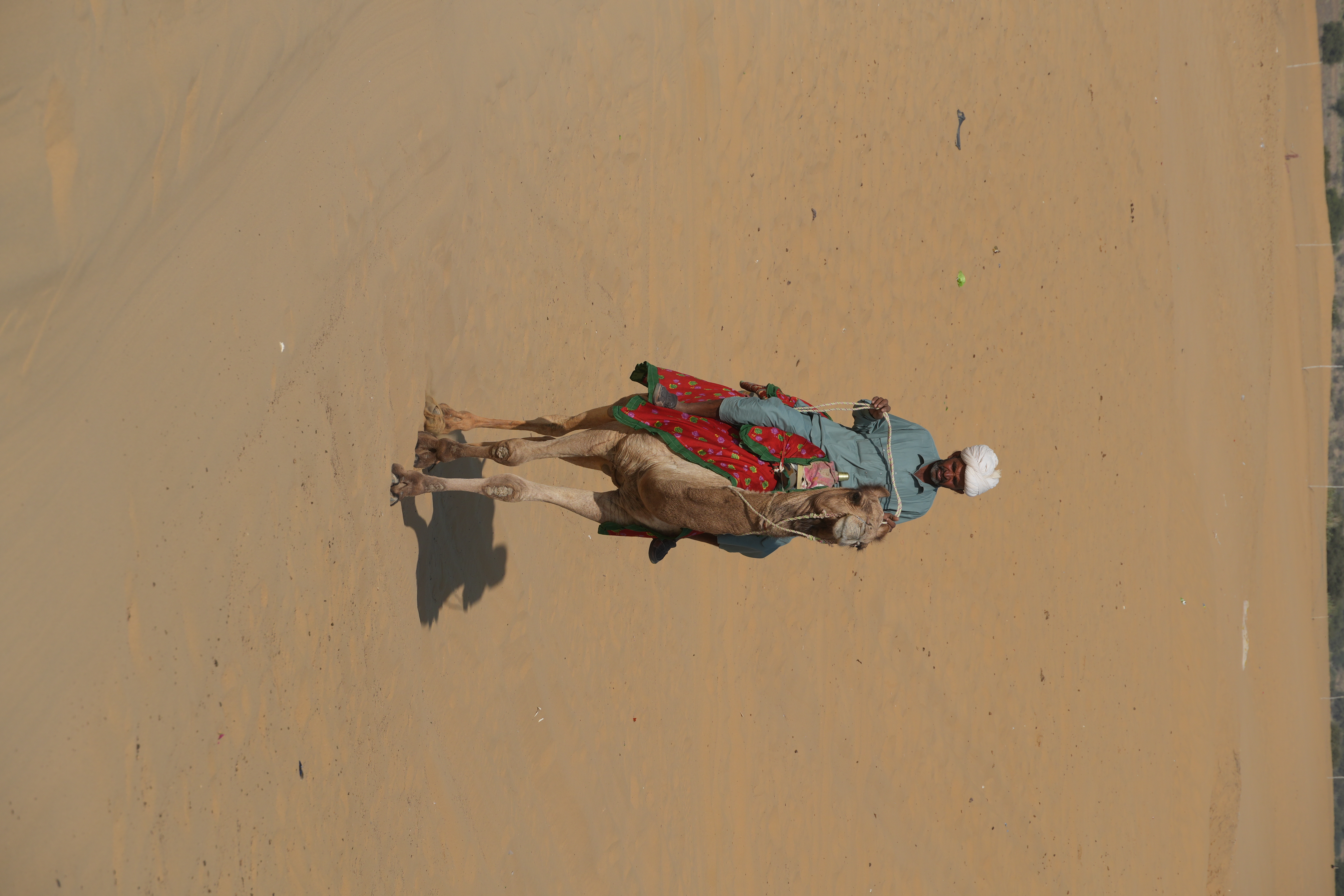
I stood there with my street photography camera, woefully inadequate for capturing birds in flight, and did my best with the photos you see above. The Godawan moved with a particular kind of grace, heavy-bodied but somehow elegant, disappearing in and out of the bushes, perfectly adapted to this specific ecology of grassland and scrub. The same guide who took us on the Godawan safari also ran a tent stay in the desert, and the package included a complimentary sand dune safari at Sam. The dunes appeared suddenly, rising out of the flat landscape like they'd been conjured. What we didn't initially understand was how the dunes were sectioned between different businesses, each operating their own slice of sand with ATV rides, camel rides, photography setups, music vendors. We wandered off by mistake while just enjoying walking across the dunes, and a guy with a camel approached us, the light hitting him beautifully, offering a ride for 200 rupees. We took it. Our guide found us and chided us, explaining this is how the place works: each business's customers stay in their section, but once you take an ATV you can range across the whole desert.
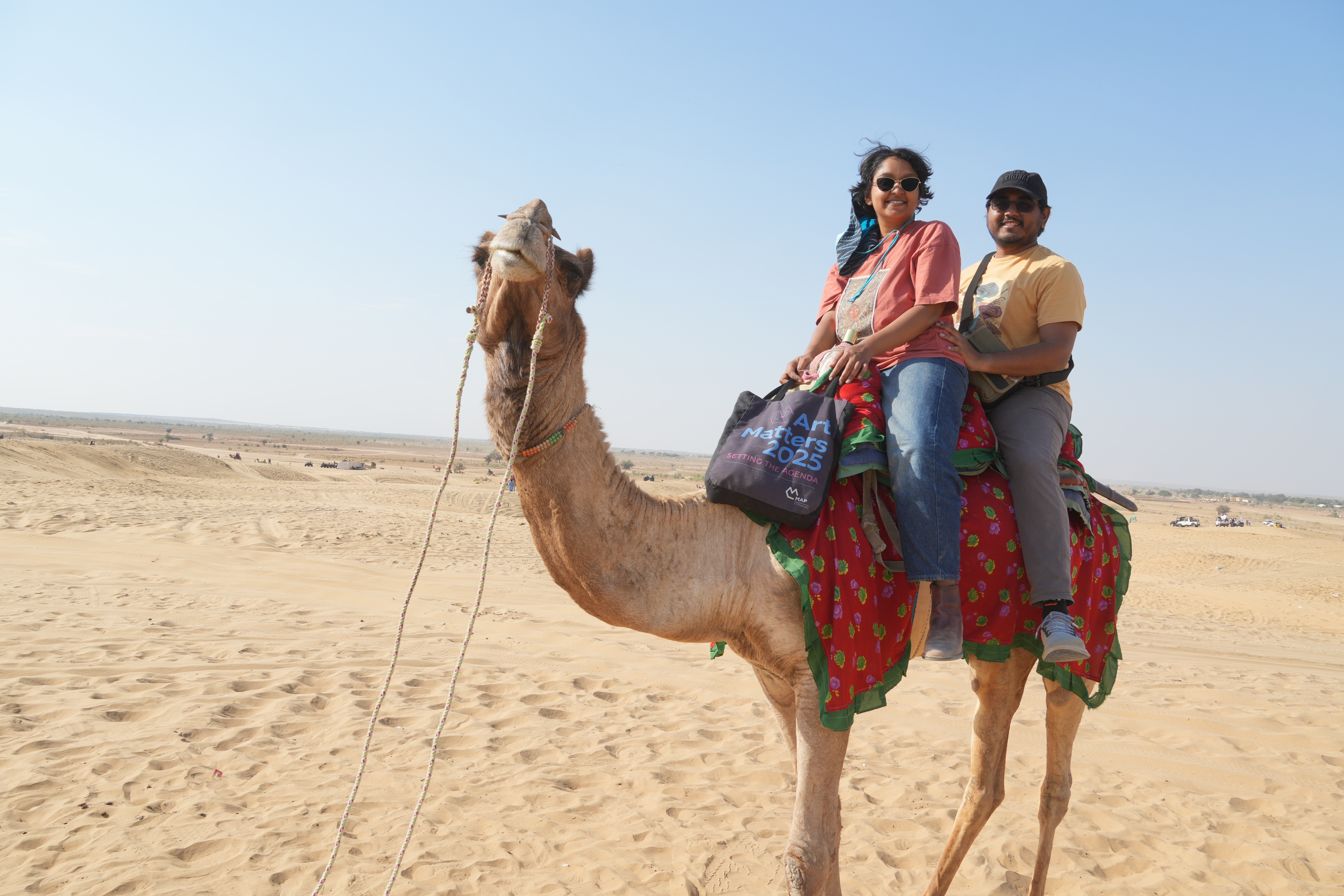
We walked around for a bit, annoyed by this sectioning off of what should be a national resource. But I also understood it. These people's lives are entirely connected to this terrain, this is their primary income, and there's something almost smart about how they've arrived at this equilibrium of dividing the space. Still, it felt expensive and commercial in a way that made me uncomfortable.
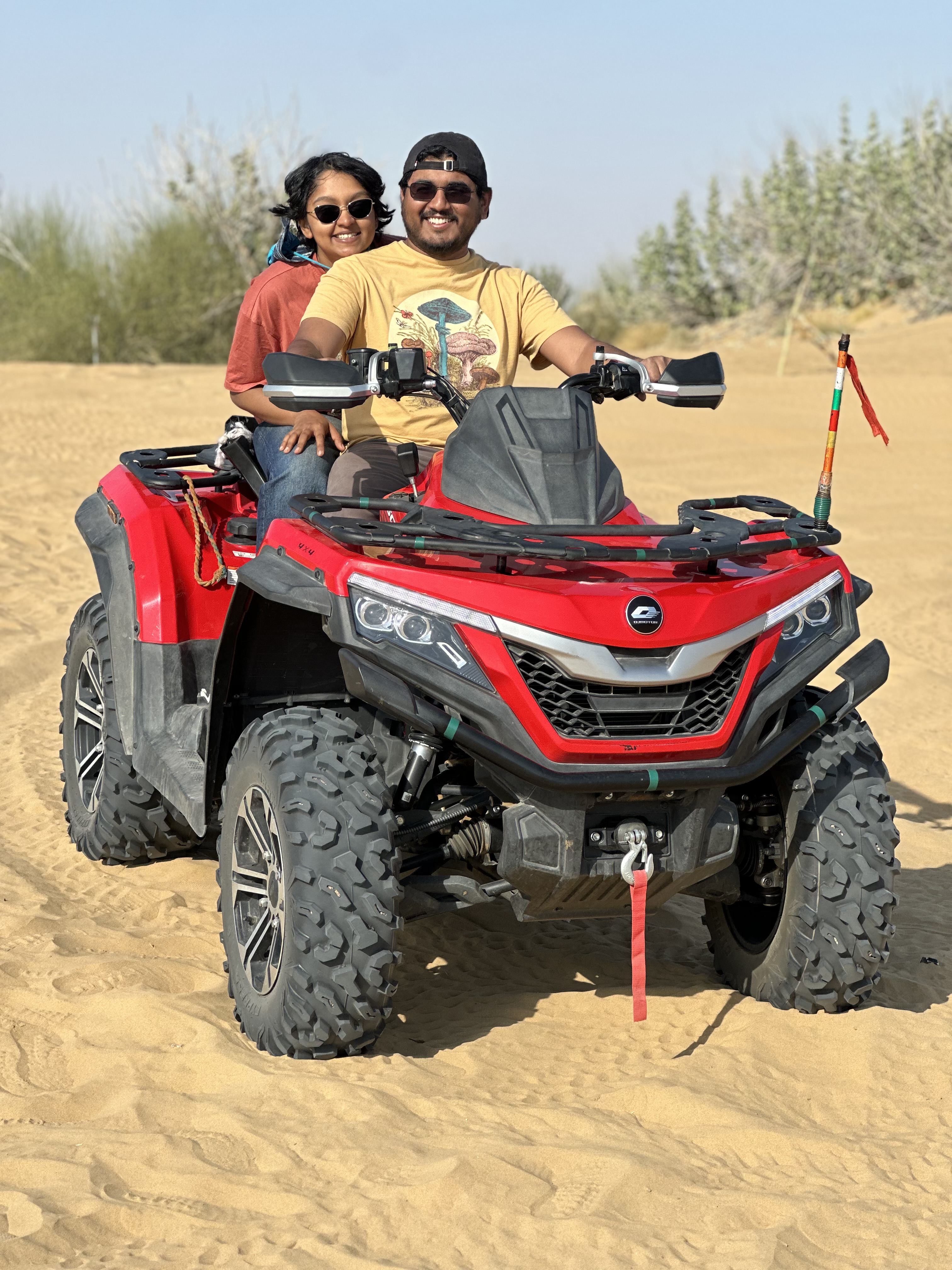
Towards the end though, we took an ATV ride together, and it was genuinely fun. The person driving took us around almost mechanically, pointing out spots relevant to Bollywood films that had been shot here, and then there was this small circular section where my partner and I got to actually drive the ATV ourselves, going in circles, feeling stupid and touristy but also laughing, having a good time despite ourselves.**
Udaipur: Exhaustion and Encounter
By the time we reached Udaipur, we were tired. The constant planning, moving, searching for decent food, navigating unfamiliar streets had accumulated into a deep fatigue. We needed time to simply stop, to integrate all that we'd experienced before returning to Bangalore. So we did very little in Udaipur. We walked without half baked itinerary, sat in cafes, worked on our laptops, and allowed the city to reveal itself through chance rather than intention.
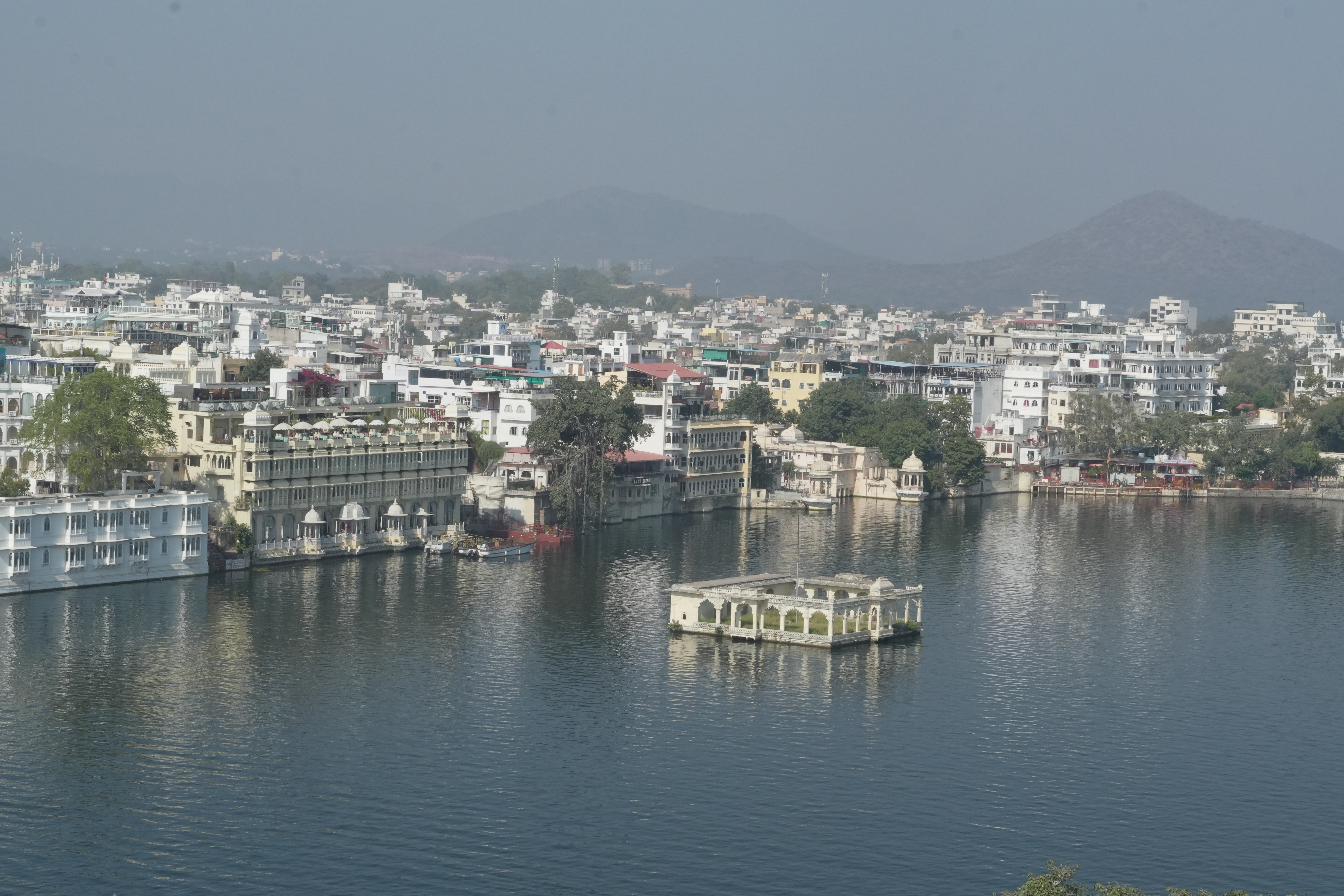
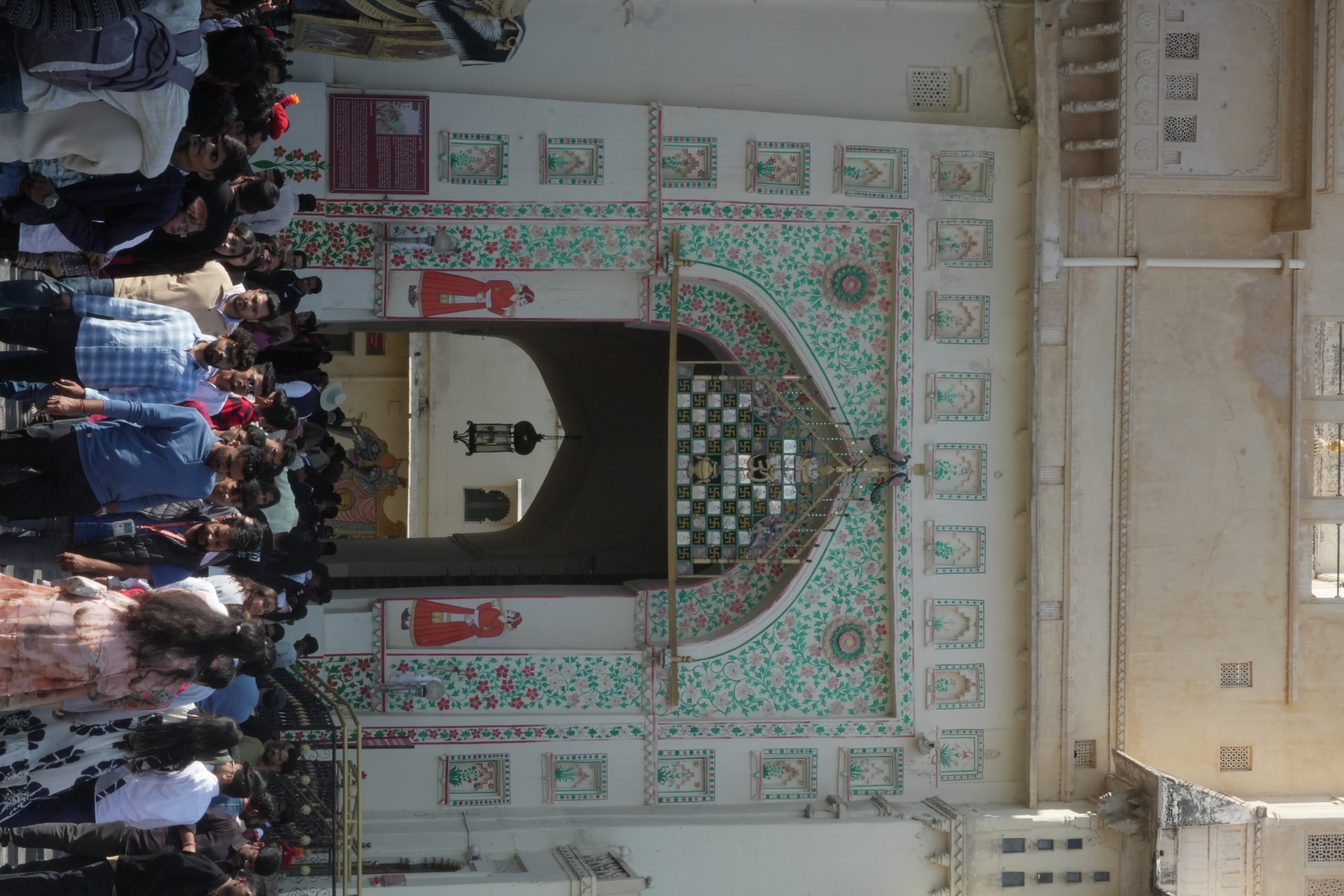
With a jaded view of monuments, the first day we went to the city-palace. We entered palace and found it was extremely crowded so we decided to walk around only on the outside and visited a museum which had great views of the islands and the city.
The next day we visited Kapil Sharma and his father Lalit Sharma, sixth-generation artists descended from a lineage of Nathdwara miniature painters. Their great-grandfather and grandfather Ghanshyam Sharma was a master of the pichwai tradition, those elaborate cloth paintings that serve as backdrops for Krishna worship. The family studio sat removed from the city's tourist buzz, a quiet space where the work itself took precedence.
Lalit Sharma, born in 1953, began helping his father and grandfather with pichwais as a child, learning through observation and participation rather than formal instruction. He later completed a master's degree in drawing and painting at the University of Udaipur, bringing academic training to bear on traditional practice. His work maintains the intricate detailing and color sensibility of miniature painting while expanding to larger canvases and incorporating contemporary subject matter. The architecture of Udaipur appears frequently in his compositions: palace walls, lake edges, the hills and trees that define the city's particular topography.
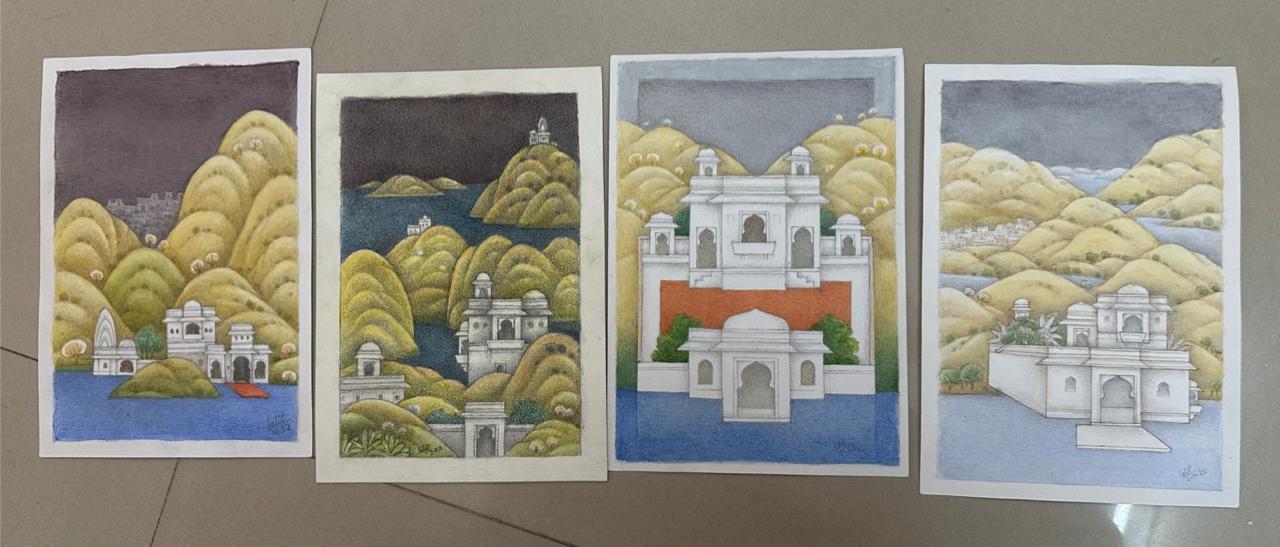
His son Kapil has pushed the tradition even further. After graduating from the National Institute of Design in visual communications, he began combining miniature painting techniques with new media. His lenticular prints create the illusion of motion within the picture plane, banana trees and kaner flowers shifting as the viewer moves. This is tradition in active dialogue with the present, neither frozen in amber nor abandoned wholesale but rather evolving through conscious engagement.
Meeting Kapil's father was particularly moving. This soft-spoken man who starts his practice at 4 a.m. every day pulled out more than fifty artworks and laid them across the floor for us to see. The gesture was generous, an opening of his entire creative world with a craving for his work to be viewed. Looking at those paintings, I saw someone who had found a way to honor the past while remaining present to the world as it exists now. His felt grounded, the product of decades spent working through the tension between inheritance and innovation.
We also visited the Bameer Studio near the City Palace, run by artists whose work departed more dramatically from tradition. Their practices incorporated collage, abstraction, and commentary on contemporary. And we met Praful, a woodcut print artist working at one of the studios. He showed us his carved blocks, explained his process, demonstrated the custom tool he'd built to create specific effects. The faces in his prints, he told us, connected to his village upbringing, to emotional landscapes that shaped him but that he'd also had to leave behind to pursue art in the city.
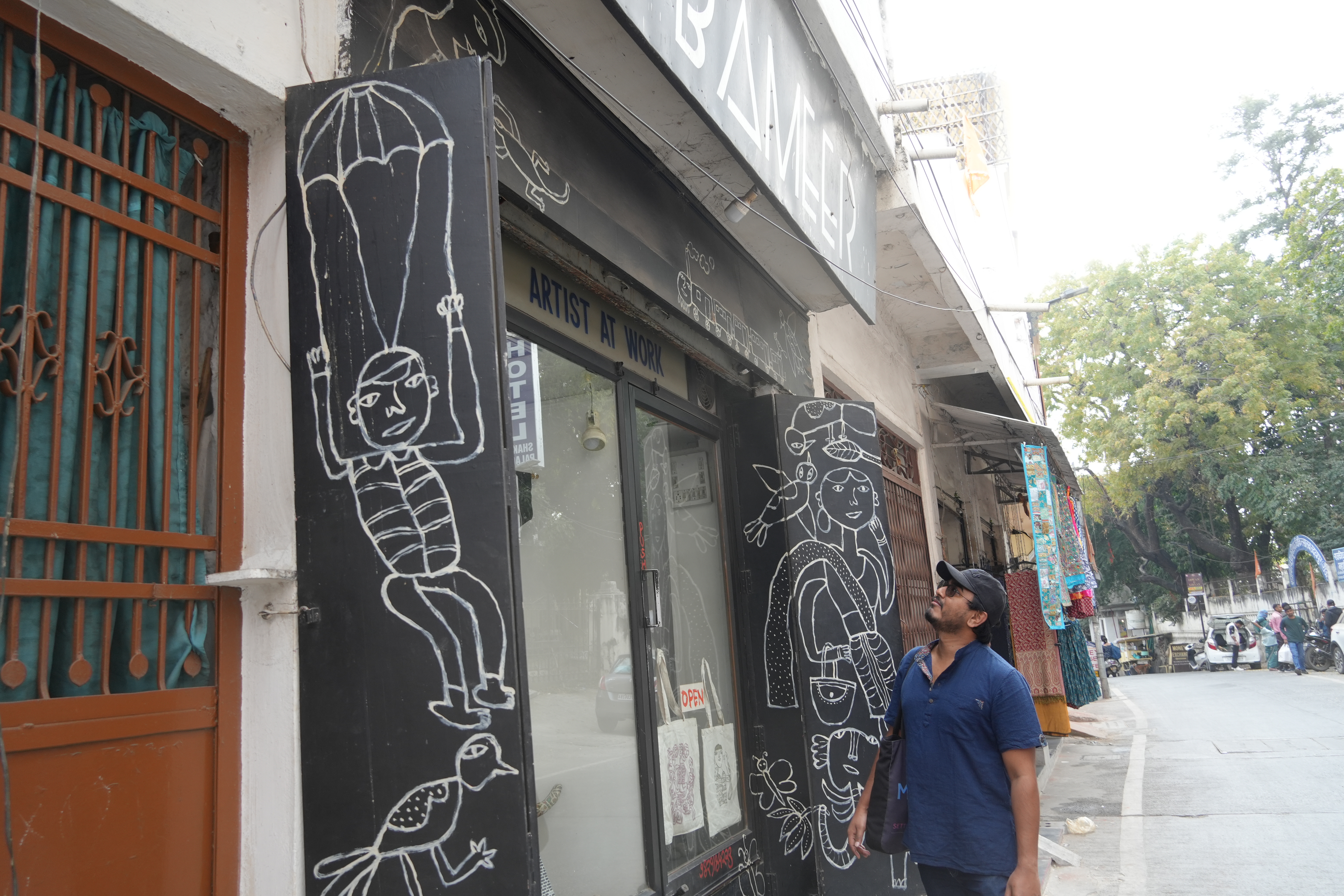
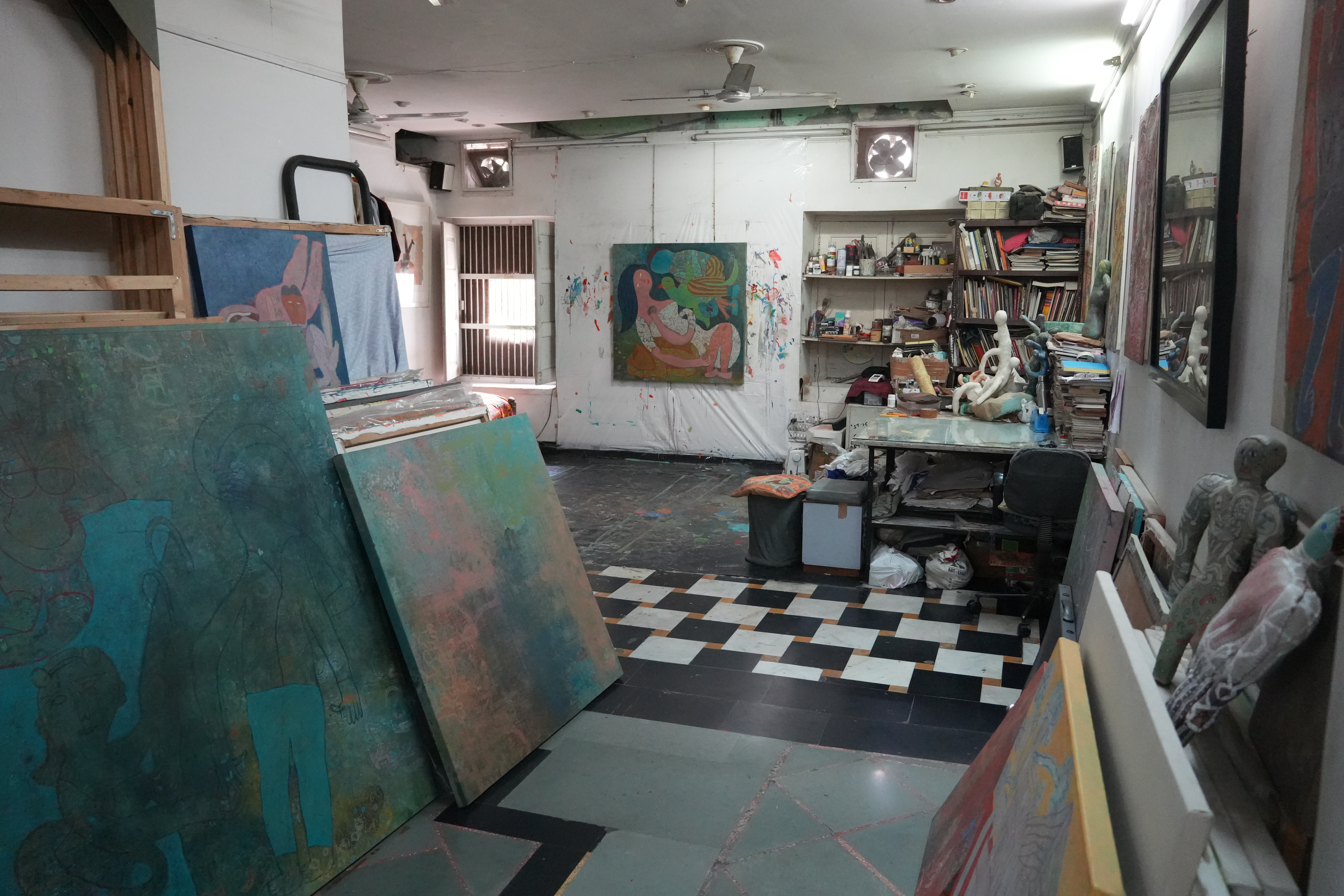
Each of these encounters raised the same question: what does it mean to carry forward a tradition in a world that has fundamentally changed? The miniature painters of Nathdwara created works for a specific devotional context, funded by temple patronage and merchant wealth. That economic and spiritual ecosystem has largely disappeared. Today's artists must navigate markets driven by collectors, galleries, and tourists, creating work that speaks to audiences with entirely different frameworks of understanding. Some, like Lalit and Kapil Sharma, find ways to bridge these worlds. Others abandon traditional forms entirely, using contemporary media to address contemporary concerns.
But even as I admired these artists' practices and the integrity with which they approached their work, I couldn't escape a broader sadness about Udaipur itself. The city felt overwhelmingly touristy in ways that Jodhpur and Jaisalmer did not. Instagram photographers posed at every corner, treating the place as a backdrop rather than a lived environment. The lake had become a stage set, beautiful but also somehow hollow. We found ourselves annoyed by the superficiality of it all, the reduction of complex cultural history to photogenic moments.
What we craved, and could not find, was a vibrant contemporary culture that engaged meaningfully with the present. The youth we encountered seemed lost in their phones, consuming rather than creating, passive rather than active. The two main sources of income for Rajasthan appeared to be mining and tourism: one extracting the land's resources, the other packaging the past for consumption. Neither generated culture in the generative sense, neither created conditions for genuine innovation or artistic risk.
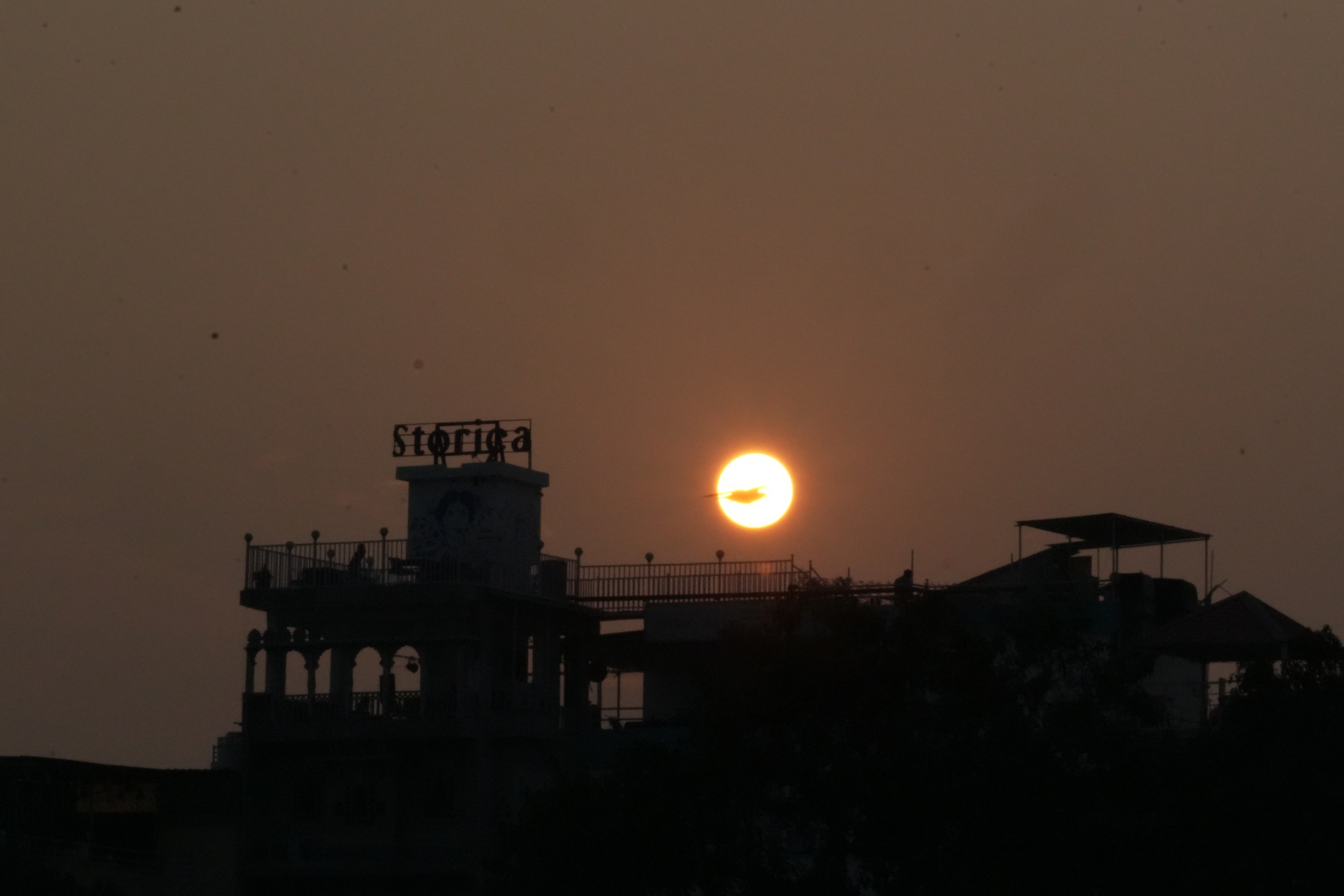
We walked around got some sweets and then caught the last sunset of the year before going in to relax and gather some energy for the NYE party!
The inviting and harrowing return to the luru
Back in Bangalore, settled into my workspace with a clean pour-over, my partner and I find ourselves thinking about what we witnessed. The question that followed us through every city: how do places connect healthily to their past while embracing the future in creative ways that mark the present?
Rajasthan's cities carry weight. Every stone in Mehrangarh speaks of dynasties and conflicts. Every water system in Jodhpur holds centuries of knowledge about surviving in the desert. Every piece of jewelry in the Amrapali Museum connects to generations of metalworking skill. This depth creates richness, but it also creates paralysis.
The state seems stuck. The young people have been raised to venerate their heritage, to see the forts and traditional crafts as the pinnacle of achievement. But what space does that leave for them to create something new? The result is a kind of stasis where the present becomes a pale copy of the past.
Bangalore doesn't have this burden. The city's history is shallow enough that people can build without constantly measuring themselves against some golden age. The tech industry, startups, contemporary art, these emerge from asking what's possible rather than what's traditional. This creates its own problems: environmental destruction, loss of regional identity, a certain placelessness. But it also creates room for experimentation.
What I keep thinking about is how to hold both impulses: the depth of historical knowledge that creates wisdom about place and climate, combined with permission to let that knowledge evolve. The water systems of Jodhpur represent ecological intelligence, but preserving them as monuments makes them inert. We need to understand their principles and apply them to contemporary challenges, not just protect them as heritage. This reminds of the effort that JDH was talking to convert a Jhalra of the past to something relevant to the contemporary.
The trip taught me that past and present aren't opposed. But synthesis of the future from the two requires courage: courage to risk failure, permission to imagine differently. These feel scarce in Rajasthan, where history's weight constrains experimentation. The artists we met created that permission for themselves through education and travel, but they were exceptions.
The trip measured my own reality in ways I didn't expect. I've spent this sabbatical year in a lot of reflection, conversations with myself about the past, the structures I built before, the patterns I fell into. There's been this pull to honor what came before in my own life, to understand it, to learn from it. But also this need to not live there, to configure the present knowing what I want for the future while not being trapped by what already happened. Rajasthan illuminated that condition for me. Watching these cities struggle with their relationship to the past felt like watching my own struggle externalized in stone and water. The question of how to carry forward what matters without being paralyzed by it, that's not just about cities. It's personal.
We navigate this tension too in Bangalore. We've built lives around sub-cultures like (coffee, music, art & urban exploration, creative work. These connect us to traditions even as we adapt them to our needs. The question is always how to stay in dialogue with what came before without being imprisoned by it.
This omnipresent search, for ways of living that connect to the past while embracing a future built through creative engagement with the present, continues.